Handcrafted amigurumi marine figures offer an engaging, imaginative avenue within the fiber arts, enabling crafters to transform simple skeins of cotton yarn into hydrodynamic, three-dimensional ocean creatures. Crocheting miniature marine mammals allows crafters to explore smooth anatomical curves, streamlined snouts, curved dorsal fins, and distinct horizontal flukes using foundational stitches. This comprehensive tutorial details ten unique amigurumi dolphin ideas, guiding makers through concepts ranging from classic arched bottlenose dolphins and pastel nursery rattles to leaping desktop mascots and floral-crowned coastal hybrids. Readers will discover the technical mechanics of continuous spiral crochet, seamless color transitions between dorsal coats and ventral bellies, flipper positioning, and child-safe facial embroidery. Creating your own marine plush toys eliminates reliance on mass-produced plastic playthings, granting complete creative control over fiber safety, yarn composition, and custom decorative accents. In addition to creating cherished childhood keepsakes, mastering these three-dimensional shaping techniques builds versatile skills that translate directly into modern nursery home decor, seasonal coastal mantels, and hanging baby mobiles. By applying core methods such as adjustable magic rings, single crochet increases, and invisible decreases, crafters of any experience level can achieve clean, boutique-grade results. The upcoming sections outline essential preparation workflows, materials checklists, ten two-paragraph project breakdowns, and practical project planning strategies.
Why This Idea Is Trending or Useful
Marine-inspired animal designs continue to lead trending ideas across modern digital craft platforms and Pinterest ideas because they balance graceful aquatic anatomy with cheerful, modern decor appeal. Contemporary interior styling frequently embraces ocean motifs to introduce serene, refreshing hues and soft textures into minimalist style nurseries, playrooms, and sunrooms. The sweeping, hydrodynamic contours of a dolphin provide visual flow, making finished pieces attractive as standalone sculptural objects on modern open shelving. As an engaging DIY creative project, crocheting an aquatic mammal requires very little physical space, allowing makers to make steady progress during daily travel or quiet evening hours. Because foundational dolphin bodies rely primarily on basic single crochet stitches worked in compact spirals, this craft serves as an exceptionally beginner friendly entry point into complex organic sculpting. Designing custom dolphin plushies also generates smart budget ideas, transforming modest remnants of slate-gray, seafoam, sky-blue, and cream yarn into high-value handmade keepsakes, baby shower gifts, or desktop organizers. Furthermore, these sturdy finished toys adapt effortlessly into home decor, functioning as hanging wall charms, mobile accents, or curtain tiebacks that withstand years of handling.
Materials and Preparation
Thorough planning and disciplined supply acquisition form the essential foundation for producing durable, well-shaped amigurumi dolphin figures that retain their streamlined structure through repeated play. The primary fiber selection should focus on sport-weight or DK-weight mercerized cotton yarn, as smooth cotton fibers provide crisp stitch definition, resist fuzzy pilling, and wash cleanly without stretching. Match this yarn with an ergonomic aluminum crochet hook sized between 2.0 mm and 2.5 mm to produce a dense, tight fabric that prevents internal polyester fiberfill from showing through the stitches. Essential assembly tools include blunt steel tapestry needles, micro locking stitch markers, sharp thread snips, certified baby-safe rattle inserts, flexible aluminum craft wire, and premium hypoallergenic polyester stuffing. For child safety and long-term durability, use colorfast cotton embroidery floss to stitch gentle curved eyes or subtle French knots rather than plastic safety eyes that might detach under tension. Preparation begins by verifying your stitch gauge on a small sample sphere to confirm that the fabric remains completely opaque under light tension. Pre-wind your yarn skeins into center-pull cakes to prevent knots, and set up an organized work tray equipped with locking markers to track your round counts accurately throughout construction.
1. Classic Sleek Bottlenose Dolphin with Arched Spine
Step-by-Step Guide
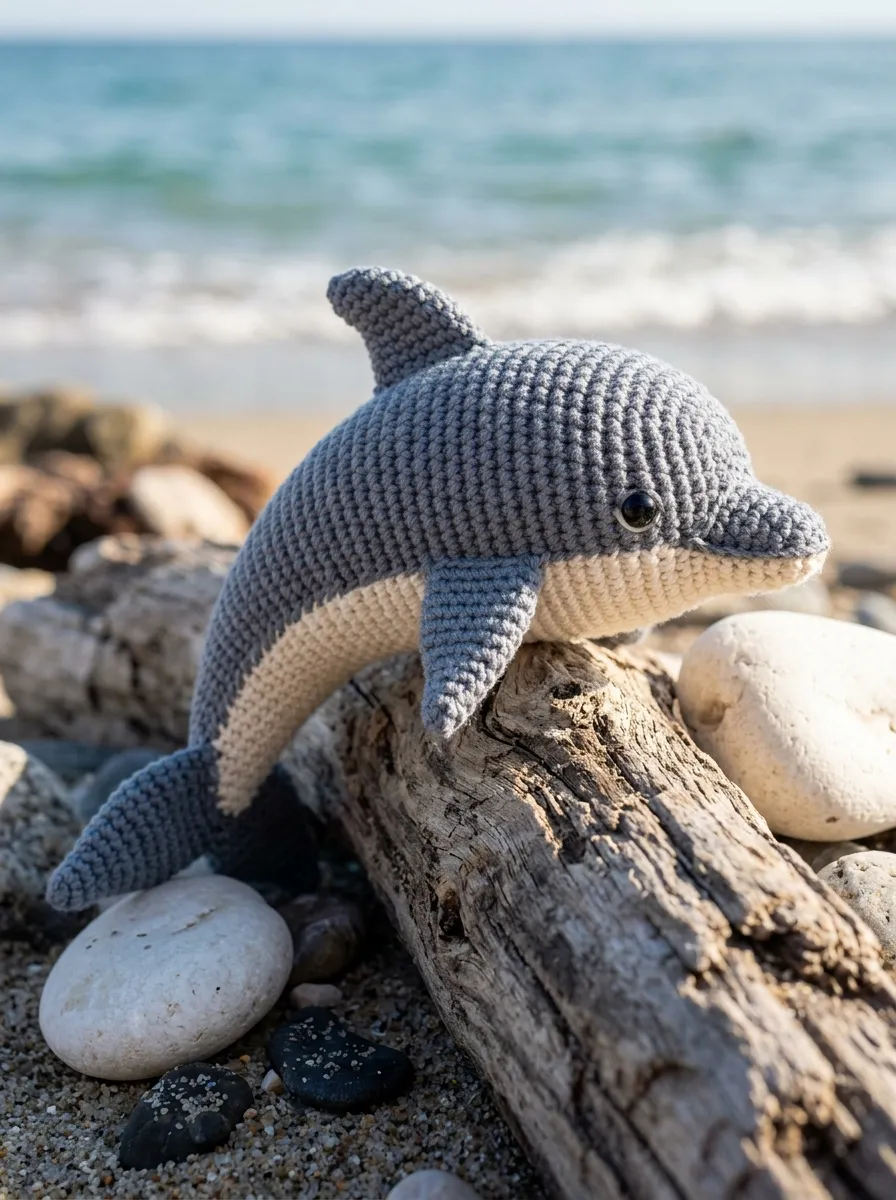
The classic sleek bottlenose dolphin design captures authentic marine grace through a continuous, sweeping curve along the spine, an elongated snout, and balanced pectoral fins. This design features a two-tone colorway with a cool slate-gray dorsal coat seamlessly transitioning into a flat, unbleached cream belly patch along the lower jaw and abdomen. The defining attribute of this figure is the subtle downward curvature of the tail stock, which replicates the natural swimming motion of a wild dolphin slicing through ocean currents. Dense single crochets provide structural firmness, ensuring the snout and flukes hold their distinctive contours without collapsing under gentle handling. The clean, neutral gray and cream palette integrates effortlessly into modern maritime themes, nautical nursery spaces, and coastal living rooms, offering a timeless aesthetic that avoids exaggerated cartoon proportions.
To construct this classic marine figure, begin at the tip of the snout with slate-gray cotton yarn, placing six single crochets into an adjustable magic ring and expanding gradually over six rounds to twelve stitches. Shape the characteristic forehead melon by working concentrated increases along the top half of the rounds while keeping the bottom stitches flat, expanding outward to thirty stitches across twelve continuous rounds. Introduce unbleached cream cotton along the lower ten stitches to build the pale belly, maintaining neat yarn carries across the interior cavity. Taper the torso toward the tail stock using evenly spaced invisible decreases, packing the head and body firmly with dense polyester fiberfill before splitting the final round to crochet two horizontal flukes. Crochet two small triangular pectoral fins and one curved dorsal fin, stitching them firmly to the body with matching thread before embroidering gentle sleeping eyes using black cotton embroidery floss.
2. Sleeping Pastel Nursery Dolphin with Rosy Blushed Cheeks
Read This:
Execution Process
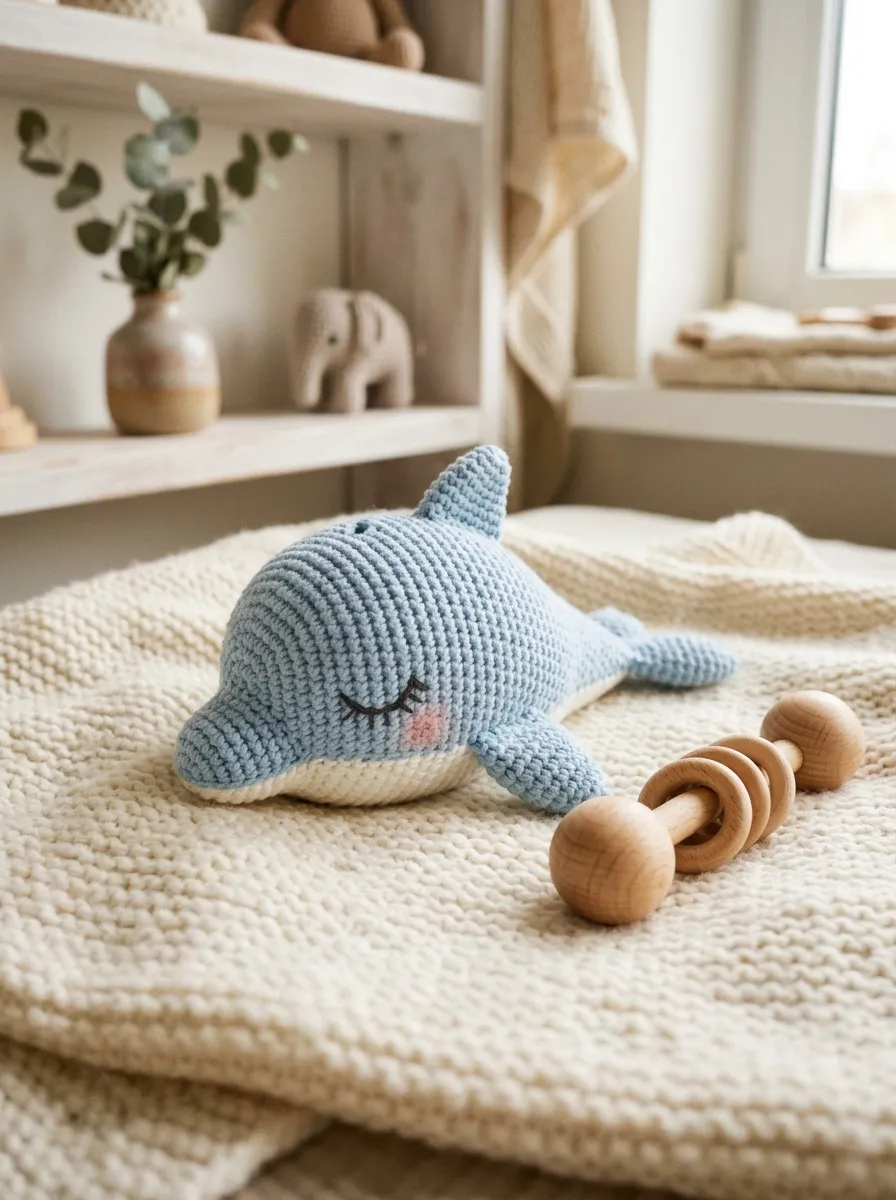
Soft pastel palettes introduce soothing tranquility, gentle visual harmony, and whimsical warmth to traditional ocean animal designs. This project replaces realistic dark gray tones with soft powder blue, mint green, or pale lavender yarn, complemented by an unbleached milk-white belly and soft pink powdered blush accents. The dolphin is designed in a relaxed, horizontal resting posture, engineered to lay flat across nursery shelves, bedside tables, or changing stations. The facial styling highlights peaceful, downward-curving sleeping eyelashes hand-embroidered with dark gray floss, eliminating hard plastic parts to ensure complete safety around infants. The delicate sorbet tones harmonize seamlessly with modern Scandinavian nursery furniture, light birch shelving, and neutral woven textiles. Its compact, cuddle-sized shape contains no internal wires or rigid armatures, ensuring the toy remains entirely soft, squishable, and safe for supervised infant play.
To assemble this restful nursery companion, start by working the snout and forehead in soft powder-blue cotton yarn, expanding an adjustable loop over four rounds to twenty-four stitches. Work eight rounds even before introducing soft white yarn along the lower third of the body, alternating colors smoothly by completing the final yarn-over of each color transition with the incoming strand. Before tapering the tail stock, use a blunt tapestry needle threaded with dark charcoal embroidery floss to stitch two delicate, downward-curving sleeping eye arcs between rounds nine and eleven. Lightly pack the interior with cloud-soft polyester batting, keeping the lower belly slightly under-stuffed so the finished animal rests flat without rolling. Crochet two paddle-shaped side flippers and a gentle, rounded dorsal fin, attaching them securely with reinforced whip stitches. Finish by applying a subtle touch of pink cosmetic blush onto the cheeks using a dry cotton swab to achieve a sweet, peaceful expression.
3. Playful Leaping Dolphin Mounted on a Swirling Wave Base
How to Create
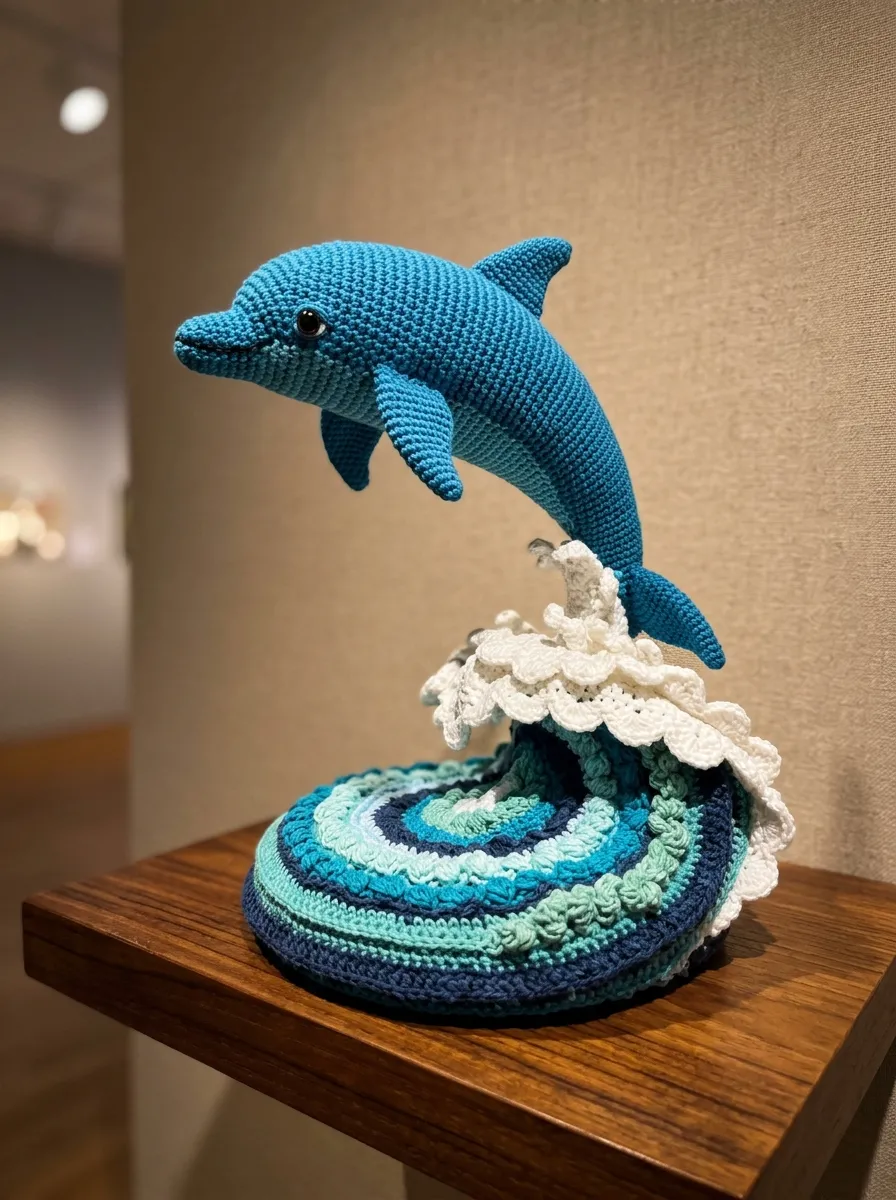
Dynamic, action-oriented amigurumi designs capture kinetic movement, artistic storytelling, and sculptural presence within handcrafted fiber projects. This project pairs an arched, leaping ocean dolphin with a separately crocheted swirling ocean wave pedestal that functions as an integrated display stand. The dolphin features a pronounced C-shaped curve along its spine, angled upward as if breaching the water’s surface in mid-jump. The supporting wave base is worked in textured rounds of seafoam, aqua, and deep navy yarn, topped with a frothy, scalloped white crest that cradles the dolphin’s belly. This two-part construction elevates the finished animal into an eye-catching tabletop sculpture, perfect for study desks, bookshelves, and coastal mantels. The stable, weighted wave pedestal anchors the slender figure securely, allowing the dolphin to maintain its dramatic leaping posture without tipping over.
To construct this dynamic ocean sculpture, begin by crocheting the dolphin body in ocean-blue cotton yarn, utilizing strategic short rows along the dorsal spine to generate an organic, permanent upward curve. Pack the curved body firmly with polyester stuffing, inserting a short length of flexible plastic-coated craft wire down the spine if additional rigidity is desired. Next, build the swirling wave pedestal by crocheting a wide circular base in deep navy cotton, working upward in tiered rounds of aqua and seafoam while utilizing front-post stitches to produce raised water ridges. Finish the top rim of the wave with an undulating scallop border worked in crisp white cotton yarn to mimic churning ocean sea foam. Secure the belly of the arched dolphin to the crest of the wave using heavy-duty nylon thread, anchoring the stitches deep within the internal polyfill to ensure a seamless, permanent bond.
4. Pocket-Sized Baby Dolphin Keychain and Bag Charm
Read This:
Step-by-Step Guide
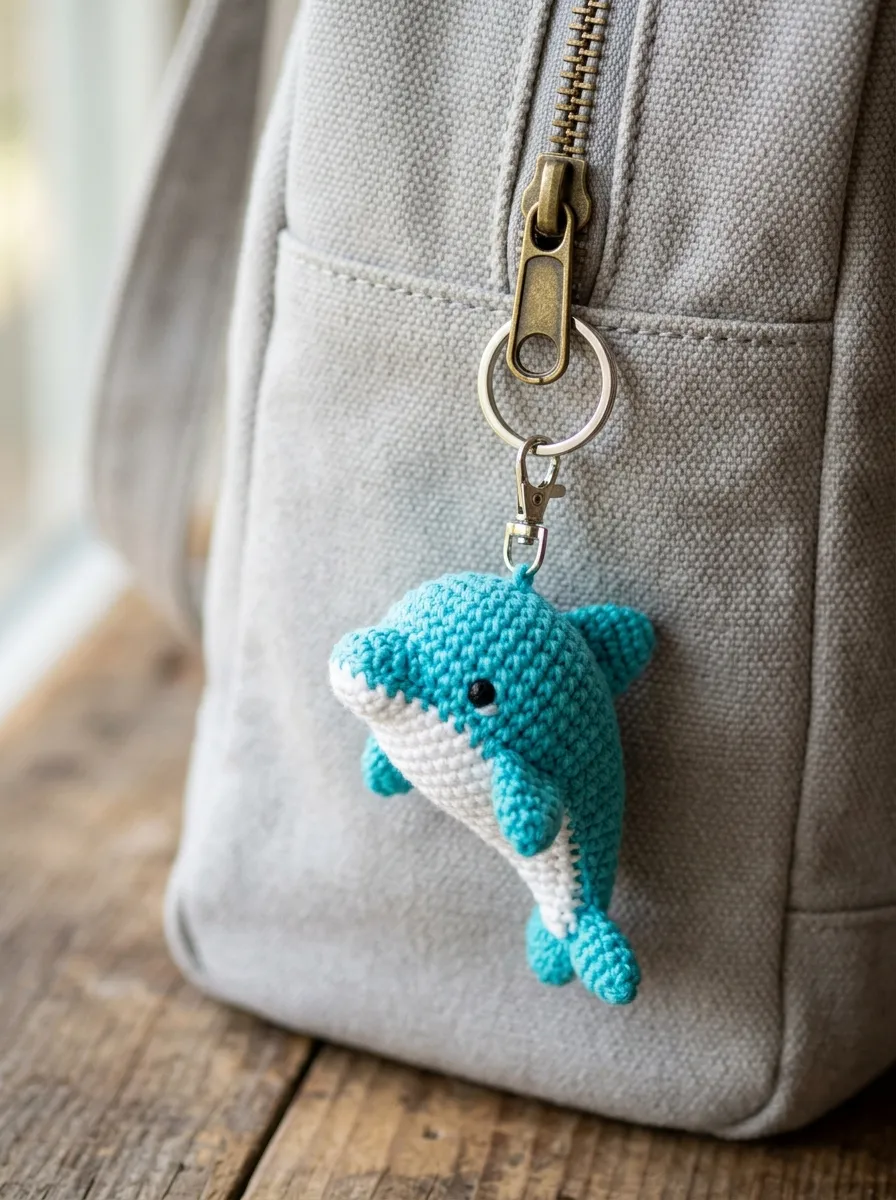
Miniature fiber charms combine everyday portability, delightful character design, and functional tactile utility, turning keys, school backpacks, and diaper bags into cheerful personalized accessories. This project scales down the dolphin silhouette into a compact, three-inch miniature mascot featuring simplified curves, an oversized rounded head, and stubby flippers. The streamlined geometry distributes internal stuffing pressure evenly, preventing the figure from flattening or deforming when stored inside pockets, purses, or crowded commute bags. The lightweight cotton construction ensures the charm will not drag down backpack zippers or scratch car ignition consoles during daily use. Its bright turquoise and white color blocking provides high visibility, making lost keys easy to locate inside deep tote bags. The dense single crochet fabric resists abrasion, ensuring the charm retains its neat shape through years of active handling.
To create this micro dolphin charm, select fine sport-weight cotton yarn and a 2.0 mm crochet hook, beginning at the tiny snout with turquoise yarn in a five-stitch magic ring. Expand evenly over four rounds to twenty stitches, working five rounds straight before introducing a white cotton underside along the bottom six stitches. Embroider two tiny French knots for eyes using black thread, then pack the small cavity firmly with a marble-sized pinch of polyester fiberfill before rapidly decreasing toward the tail. Form the tail flukes by working two consecutive chain-three picot loops directly into the final decrease stitches, eliminating the need to sew separate tail pieces. Crochet two tiny three-stitch side flippers and a miniature dorsal fin, stitching them flush to the body with matching thread tails. Pass a sturdy four-millimeter split ring through the upper back behind the dorsal fin, attaching a silver swivel lobster clasp to complete the functional keychain assembly.
5. Whimsical Crowned Royal Dolphin with Golden Accents
Execution Process
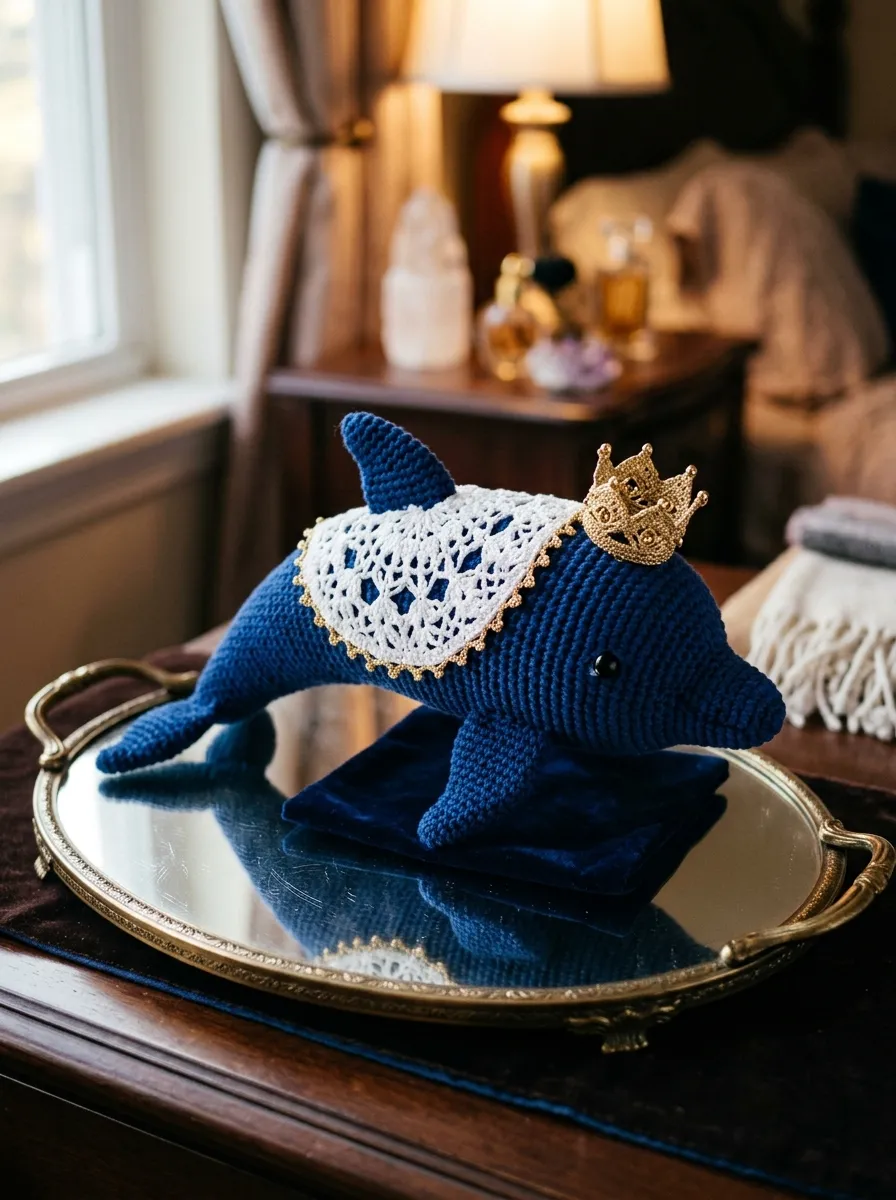
Fairytale-inspired animal designs introduce ornate embellishments, rich metallic accents, and refined craftsmanship to traditional ocean animal patterns. This design styles a graceful, arched dolphin in deep royal-navy cotton yarn, outfitted with a shimmering three-pointed micro crown worked in metallic gold thread. Resting along the dolphin’s back is a delicate saddle blanket worked in crisp white lace stitches, bordered by miniature golden picot loops and tiny seed beads. The striking contrast between the deep, matte navy yarn, the lustrous gold crown, and the delicate white lace creates visual depth and artisanal luxury, transforming a simple animal plush into a boutique-grade collectible. The majestic posture makes this figure an ideal centerpiece for ocean-themed celebrations, first birthday displays, or collector showcases, adding regal whimsy to modern interior spaces.
Begin by shaping the dolphin body in rich royal-navy cotton, working an adjustable six-stitch ring into a thirty-stitch circumference over fourteen rounds, ensuring the dorsal curve arches gracefully toward the flukes. Pack the body firmly with hypoallergenic fiberfill, sealing the tail base and attaching two sculpted navy pectoral fins and a raised dorsal fin. To craft the gilded royal crown, join metallic gold embroidery thread or fine lurex yarn with a 1.5 mm hook, chaining twelve stitches to form a circular base before working two rounds of single crochet topped with three distinct three-chain picot crowns. To construct the lace saddle, crochet a small oval blanket in pure white cotton thread, finishing the outer perimeter with tiny golden slip-stitch borders. Sew the lace blanket smoothly across the dolphin’s back behind the dorsal fin, and anchor the golden crown securely to the top of the head melon between the eyes.
6. Cottagecore Floral Crown Dolphin with Wildflower Accents
Read This:
How to Create
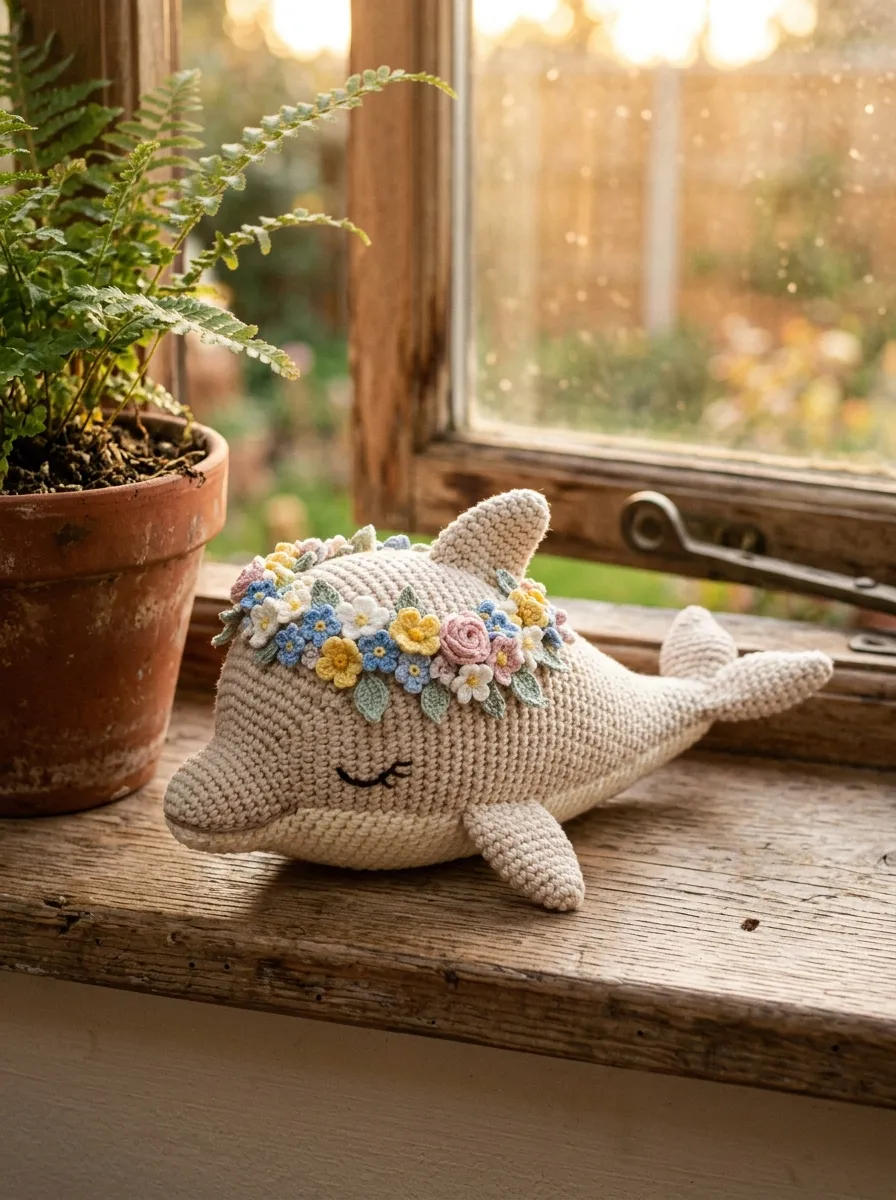
Merging rustic woodland flora with wild marine life produces a romantic, storybook character that celebrates gentle nature, cottagecore charm, and botanical artistry. This design features a gentle, doe-eyed amigurumi dolphin worked in soft unbleached oat-colored yarn with a pale cream belly, crowned by an abundant halo of hand-crocheted miniature wildflowers. Tiny blooming buttercups, forget-me-nots, and delicate sage-green leaves are clustered densely across the forehead just behind the blowhole. The muted, earthy oat base provides a warm, rustic backdrop that allows the colorful pastel blooms to stand out with visual clarity. The relaxed horizontal posture makes this figure an ideal companion for vintage bedside tables, farmhouse open shelving, and botanical plant displays. Its delicate floral details showcase fine threadwork skills, transforming a simple sea animal into an endearing handmade heirloom.
To create the cottagecore dolphin, begin with oat-colored cotton yarn, placing six single crochets into a magic ring and expanding over five rounds to thirty stitches to build the head and snout. Introduce unbleached cream yarn along the lower belly, continuing down the length of the torso over twenty rounds before tapering the tail stock into two wide, flat flukes. Embroider two sleepy closed-eye arcs using dark brown cotton floss along the sides of the head. To craft the botanical crown, crochet five miniature blossoms by working five chain-two petal loops around tiny yellow magic rings using fine pastel embroidery thread. Crochet several three-chain pointed leaflets in dusty sage green, sewing the flowers and foliage into a curved garland directly across the forehead. Finish by dusting a hint of natural rose chalk pastel across the cheeks and inner flippers for a soft, weathered glow.
7. Interactive Jingle Bell Dolphin Rattle on Wooden Teething Ring
Step-by-Step Guide
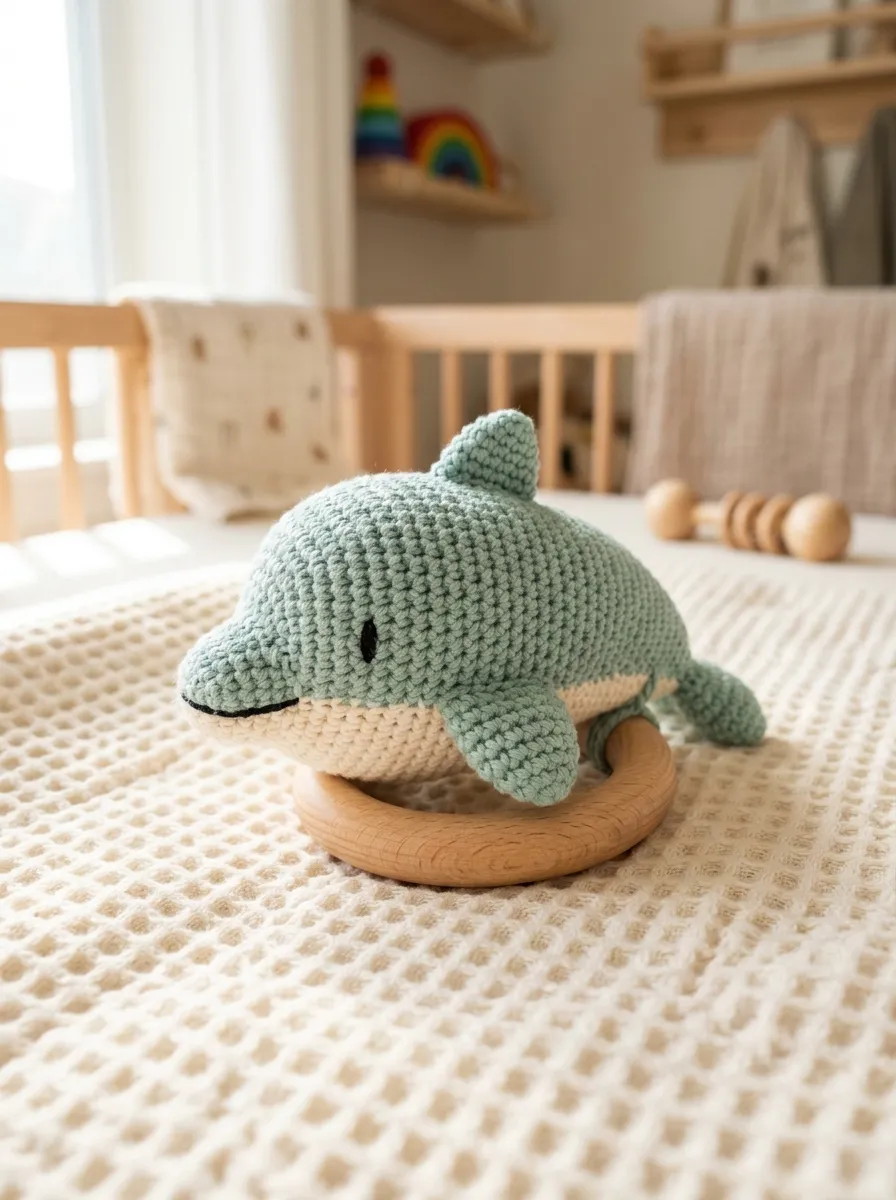
Multifunctional infant toys combine interactive sensory stimulation, motor skill development, and comforting character design into a durable fiber nursery accessory. This project designs an amigurumi dolphin head and arched torso anchored securely to a smooth, untreated natural beechwood teething ring, complete with an internal rattling element and soft fins. The tight stitches of the cotton dolphin body offer varied tactile surfaces for curious infant fingers, while the natural hardwood ring provides safe, non-toxic relief for aching gums during teething phases. The enclosed jingle bell produces a gentle, rewarding auditory chime whenever the baby shakes the ring, fostering early cause-and-effect cognitive connections. The refreshing seafoam-green and cream colorway provides visual stimulation for developing infant eyesight, while the natural wood and organic cotton materials ensure complete peace of mind for parents.
To assemble this teething rattle, select a three-inch sanded, untreated natural beechwood ring, wiping it clean with a dry microfiber cloth. Crochet the dolphin head and upper body using organic, unmercerized seafoam cotton yarn, inserting an enclosed plastic rattle disc wrapped in batting into the center core before alternating with cream stitches along the belly. Sew two rounded pectoral fins and a soft dorsal fin firmly to the body, embroidering all facial features using colorfast cotton embroidery floss with deep internal anchor knots. To join the figure to the wooden ring, crochet a flat rectangular tab of eight single crochet rows extending downward from the base of the dolphin’s belly. Wrap this crochet tab tightly around the beechwood ring, seaming the free edge securely to the belly base with double-stitched nylon thread. Test the seam strength firmly to verify that the plush figure cannot be pulled free from the wooden ring during vigorous play.
8. Chubby Kawaii Dolphin with Starfish Hair Clip

Execution Process
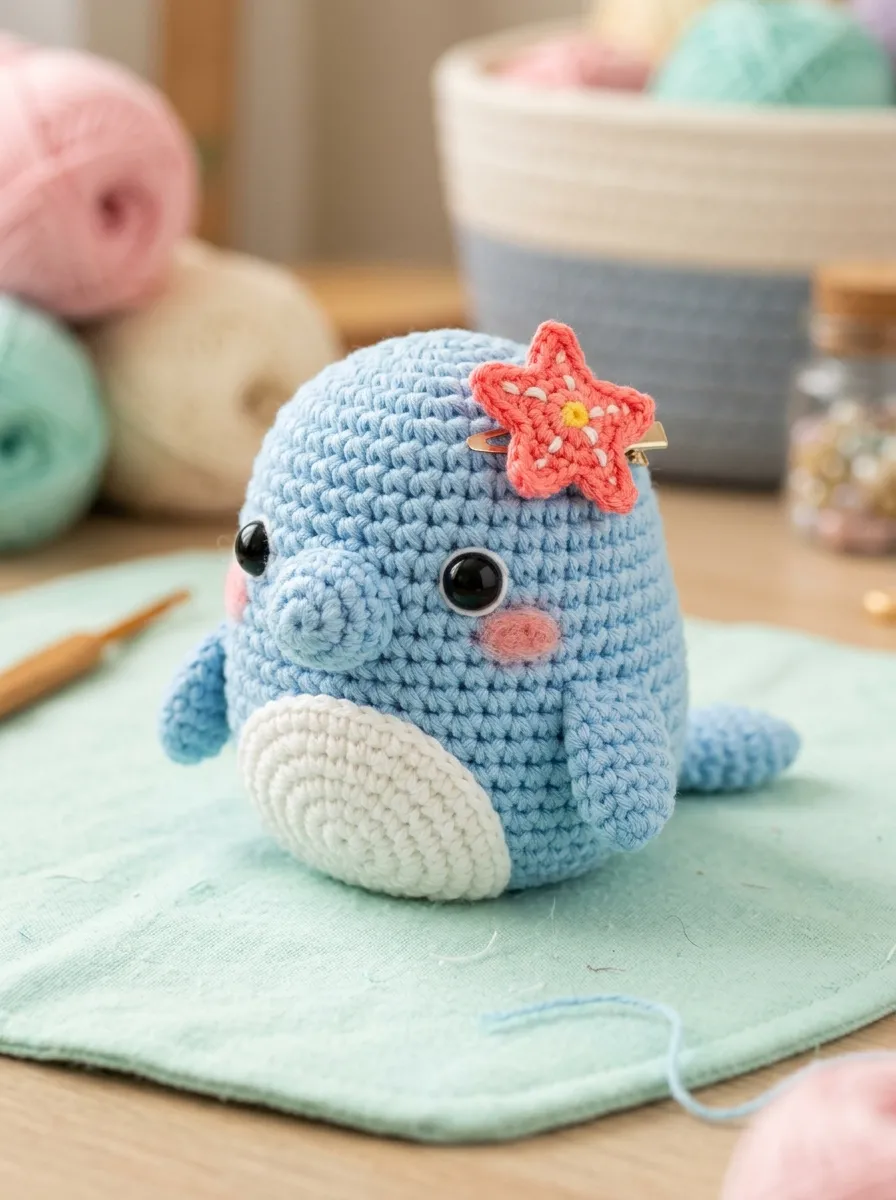
Kawaii character styling celebrates youthful innocence, exaggerated rounded proportions, and simplified anatomy to create universally endearing, huggable figures. This design features a spherical, plump dolphin body where the head and torso merge seamlessly into a single chubby teardrop shape. The animal displays oversized, wide-set black eyes positioned low on the face, tiny rounded flippers, and a miniature bright coral starfish perched jauntily over one eye like a hair clip. The defining characteristic is the compact, ball-like silhouette that accentuates the plump, rounded contours without visually cluttering the simple character design. The low, rounded center of gravity makes the toy exceptionally stable, allowing it to sit upright on desks, bedside tables, or computer monitors without tipping over. Its compact, squishable form contains no delicate extremities, ensuring it withstands rough handling during imaginative toddler play.
To create this chubby kawaii dolphin, begin with sky-blue cotton yarn, placing six single crochets into an adjustable magic ring and expanding rapidly over six rounds to thirty-six stitches. Work twelve continuous rounds while shaping a gentle pear-like taper down toward the lower abdomen, incorporating a white belly patch along the lower ten stitches. Insert safe, hand-embroidered black felt circles or dense satin-stitched floss discs for eyes between rounds ten and twelve, placing them eight stitches apart to achieve an authentic kawaii expression. Pack the plump cavity generously with cloud-soft polyester batting, maintaining a round, squishable volume before cinching the base shut with invisible decreases and attaching two miniature flukes. Crochet a tiny five-point coral starfish using single crochets and picot tips, stitching it securely above the right eye. Finish by applying dry pink chalk pastel blush beneath the eyes using a soft cotton swab.
9. Mother and Calf Swimming Duo Joined by Floating Waves
How to Create
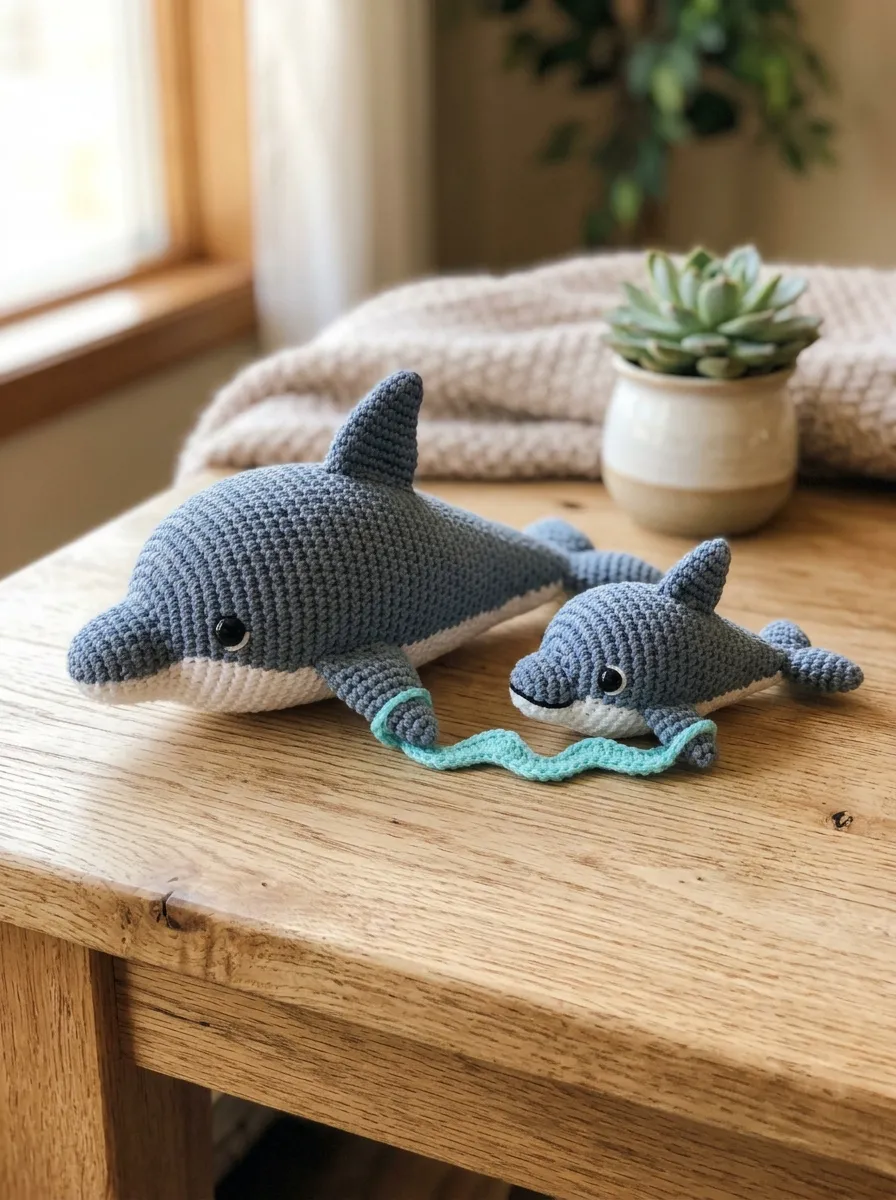
Family-themed amigurumi designs introduce touching emotional warmth, proportional contrast, and delightful narrative storytelling to handmade nursery decor. This project features two fully sculpted dolphins—an eight-inch mature mother and a miniature four-inch calf—positioned side by side as if swimming together through gentle ocean swells. The mother dolphin displays an elegant, protective arched spine, while the calf features larger, rounded juvenile proportions and an alert, upward-tilted head. The two animals are joined discreetly at their inner pectoral fins by a small, curved strand of crocheted blue ocean water, creating a cohesive two-piece sculptural grouping. This touching pairing functions as an heirloom nursery display, celebrating parental love and ocean harmony while adding dynamic textural movement to floating wall shelves and dresser tops.
Begin by constructing the mother dolphin in slate-blue and white cotton yarn, expanding to thirty-six stitches across the midsection and tapering over thirty rounds to form an elegant twenty-centimeter figure. Next, crochet the companion calf using identical blue and white yarns, scaling the pattern down to eighteen stitches in circumference and fifteen rounds in length to preserve identical color harmonies. Firmly pack both figures with hypoallergenic polyfill, attaching dorsal fins, pectoral flippers, and wide tail flukes to each animal. Crochet a narrow connecting ribbon of ocean waves by chaining twenty stitches in bright aqua yarn, working two rows of alternating slip stitches and double crochets to produce undulating surface ripples. Stitch one end of the wave ribbon to the mother’s lower flank and the opposite end beneath the calf’s belly, joining their inner pectoral flippers with hidden anchor stitches to lock the swimming duo in a permanent, harmonious glide.
10. Hanging Ocean Breeze Dolphin Mobile with Starfish and Shells
Read This:
Step-by-Step Guide
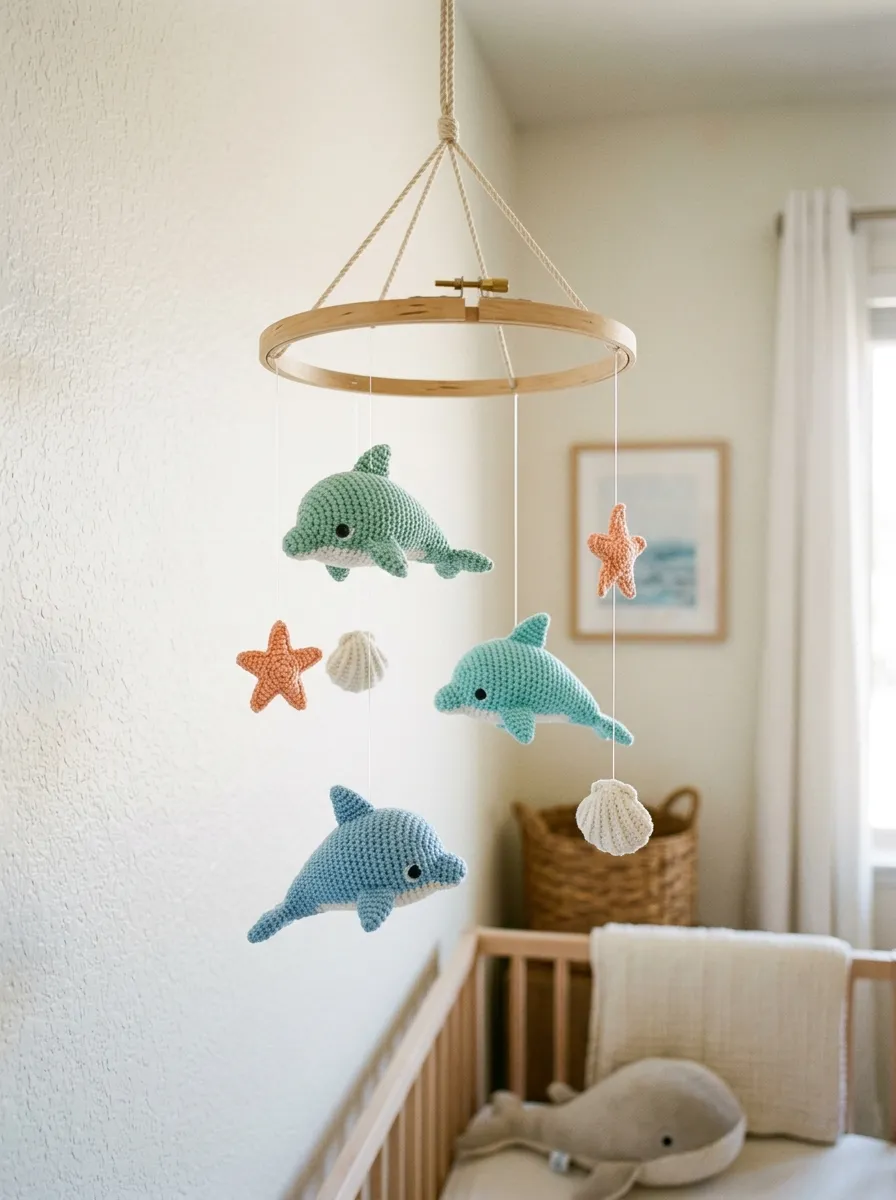
Translating three-dimensional amigurumi sculptures into hanging kinetic mobiles brings gentle motion, fiber richness, and vertical visual interest to nursery ceilings. This project suspends three miniature amigurumi dolphins, two crocheted coral starfish, and three ribbed white seashells from an untreated natural birch wood hoop. The three dolphins—crocheted in varying ocean tones of aqua, seafoam, and sky blue—hang at staggered elevations, tilting downward in a perpetual swimming circle. The gentle room air currents cause the suspended marine elements to rotate slowly, providing soothing visual entertainment for resting infants while promoting early depth perception and tracking skills. The natural wood and soft matte cotton materials introduce an organic, calming presence that integrates beautifully with modern coastal, bohemian, and minimalist nursery aesthetics.
To construct this hanging mobile, select an eight-inch natural birch embroidery hoop, discarding the outer hardware ring to utilize the smooth inner wooden hoop as your structural frame. Crochet three identical four-inch dolphins using aqua, seafoam, and sky-blue cotton yarns, finishing each with white belly patches and embroidered sleepy eyes. Crochet two small five-point starfish in muted peach yarn, along with three miniature ribbed scallop shells worked in unbleached cream cotton. Cut six lengths of strong, clear monofilament line or waxed white cotton thread, securing one marine piece to the bottom of each line at staggered lengths between six and twelve inches. Tie the upper ends of the threads symmetrically around the perimeter of the wooden hoop, balancing the weight so the frame hangs level. Attach three suspension cords to the top of the hoop, merging them at a brass hanging ring to complete the ceiling installation.
Common Beginner Mistakes and How to Avoid Them
The most critical technical error in amigurumi dolphin crafting involves loose stitch tension, which causes the fabric to stretch and allows white polyester stuffing to show through the stitches. Prevent this by selecting an ergonomic crochet hook that is a full millimeter smaller than the yarn manufacturer recommends, maintaining firm, consistent yarn wraps around your fingers throughout every round. Another frequent challenge is the appearance of jagged, stepped color shifts when transitioning between the darker dorsal coat and the pale belly; resolve this by completing the final yarn-over of the previous stitch using the incoming color strand. Beginners also frequently understuff the slender tail stock, causing the tail flukes to droop, bend, or flop unnaturally rather than holding a crisp horizontal line. Pack your figures progressively using small, dense pinches of fiberfill, using a blunt chopstick or wooden stylus to compress the stuffing firmly into the tail base before attaching the flukes. Additionally, avoid sewing flippers on crookedly by pinning all fins in place first with pearl-headed sewing pins, setting the figure on a flat table to verify bilateral symmetry before stitching. Finally, avoid using plastic safety eyes on toys intended for infants, opting instead for secure, hand-embroidered features using colorfast cotton embroidery floss.
Practical Tips for Better Results
Achieving professional, boutique-quality finishes on amigurumi dolphins relies on disciplined assembly habits and precise finishing techniques. Always utilize the invisible decrease method instead of standard decreases when shaping three-dimensional curves; inserting your hook exclusively through the front loops of two adjacent stitches produces an uninterrupted, smooth surface that mirrors a standard single crochet. Secure locking plastic stitch markers at the start of every round to avoid losing your stitch count during complex shaping sequences. When attaching flippers, dorsal fins, and flukes, leave generous eighteen-inch yarn tails on the components, using these original threads rather than secondary sewing threads to ensure seamless, color-matched joinery. Use high-strength nylon thread or double-stranded cotton when securing heavy bases, key rings, or wooden rings, anchoring the thread ends with internal square knots buried deep within the polyfill core. To give your finished dolphins a polished, professional look, lightly steam the completed cotton fabric using an iron held two inches away; this relaxes the fibers, sets the stitch tension, and creates a clean surface without flattening the three-dimensional volume.
Styling, Presentation, or Organization Ideas
Integrating handmade amigurumi dolphins into your home decor enhances living spaces while showcasing the maker’s care and craftsmanship. Style your collection of themed dolphins on a floating wooden bookshelf, on a nursery changing station, or nestled beside potted indoor plants to create playful, ocean-inspired vignettes. For children’s bedrooms, hang a series of graduated dolphin figures from an untreated birch embroidery hoop using natural waxed cotton cords, forming a custom coastal nursery mobile that sways gently with room air currents. If presenting these handmade creations as thoughtful baby shower gifts or birthday favors, place each dolphin inside an unbleached kraft paper gift box lined with shredded crinkle paper, tying the exterior with natural baker’s twine and a stamped wooden gift tag. You can also color-code personal belongings by attaching miniature dolphin charms to diaper bags, school backpacks, or library totes using sturdy swivel clasps, combining practical identification with handmade charm. When photographing your creations for digital portfolios or inspiration boards, use soft morning daylight, neutral linen backdrops, and raw wood surfaces to highlight the fine stitch definition and natural cotton textures.
Budget or Time Planning
Executing a collection of amigurumi dolphins requires minimal financial investment and structured time management to maximize creative efficiency. Save on supply costs by purchasing multi-color value packs of sport-weight cotton yarn or using leftover remnants from larger projects, as a single two-ounce skein of gray or blue yarn and white yarn can yield up to three individual small dolphins. Organize your production schedule using a modular assembly-line workflow: dedicate an initial session to winding yarn scraps and prepping hardware; use a second session to crochet all foundational bodies, heads, and flukes; and reserve a final block for embroidery, stuffing, and fin attachment. Simple, unembellished designs like the pocket-sized keychain or sleeping pastel dolphin require approximately two to three hours of active stitching, making them ideal high-efficiency weekend projects. Keep your active materials organized by storing hooks, stitch markers, safety pins, and matching yarn tails together inside clear, zippered project pouches. Planning your handmade holiday stocking stuffers and craft fair inventories several weeks in advance ensures a calm, enjoyable crafting experience, yielding beautifully detailed miniature sculptures without the pressure of rushed assembly sessions.
Creative Expansion and Advanced Inspiration
Once you have mastered foundational dolphin shaping and assembly techniques, explore creative variations to expand your fiber art designs across wider applications. Adapt your favorite dolphin patterns into functional home decor by omitting the bottom decrease rounds and inserting strong ceramic disc magnets or weighted river stones inside the base, turning the figures into decorative refrigerator memo holders or sturdy desk paperweights. You can also translate dolphin motifs into seasonal celebration decor by crocheting miniature Santa hats, autumn scarves, or graduation caps to dress your dolphins for various holidays throughout the year. Experiment with botanical, hand-dyed cotton yarns to achieve subtle, variegated color transitions across dolphin backs, introducing earthy regional authenticity to your collection. Consider designing cohesive marine mammal families, scaling the base pattern up or down by changing yarn weights from lace-weight cotton to chunky chenille yarn to create an entire pod of graduated dolphins. Document your custom color combinations, stitch counts, and accessory dimensions in a dedicated studio journal, creating a personal design archive that streamlines future creative projects and ensures consistent, professional results across every handmade collection.