Pastel color palettes have emerged as a foundational trend across fiber art and accessories, offering a calm, delicate aesthetic that elevates miniature crochet creations. Discovering curated Pinterest ideas focused on soft color schemes allows makers to transform ordinary yarn scraps into sophisticated, visually harmonious charm collections. This comprehensive guide delivers a detailed walkthrough of ten distinct pastel color combinations specifically tailored for small amigurumi charms, keychain pendants, and decorative accessories. Readers will learn the principles of color theory applied to fiber textures, including how tint, value contrast, and undertones interact under different lighting conditions. Understanding these interactions is essential because miniature projects lack expansive surface area, meaning each color placement must be intentional to define edges and prevent motifs from appearing washed out. Beyond exploring individual palettes, this guide provides practical assembly processes, hook size recommendations, and structural techniques required to execute crisp, polished charms. Whether designing accents for personal bags, drafting inventory for handmade markets, or exploring a new creative project, these structured guidelines will help crafters establish consistent, eye-catching results across all miniature textile projects.
Why This Idea Is Trending or Useful
The sustained popularity of pastel tones in contemporary handmade design stems from their unique ability to blend nostalgic comfort with clean modern design. Modern digital aesthetics frequently highlight soft desaturated tones like buttercup yellow, pale sage, powder blue, and blush pink, moving away from harsh synthetic neon shades toward gentle visual harmony. For fiber artists, working with pastel palettes offers practical value because these understated hues highlight intricate stitch anatomy without overwhelming the viewer. Miniature charms inherently carry strong DIY appeal, serving as an approachable, easy project that beginners can finish within a single afternoon using modest yardage. Unlike large garments or intricate blankets, crafting small charms allows beginners to experiment with multi-color palettes without committing to substantial yarn purchases. Furthermore, the muted nature of pastel palettes makes them versatile across various accessories, integrating effortlessly with neutral canvas bags, metallic keyrings, journal covers, and pastel stationery. By learning to balance complementary soft hues, crafters cultivate fundamental color-matching skills that apply directly to advanced fiber art concepts and larger decorative endeavors.
Materials and Preparation
Achieving clean, professional results with miniature pastel charms requires precise preparation and deliberate fiber curation before casting on the first loop. The primary materials should consist of high-grade four-ply mercerized cotton or fine sport-weight acrylic yarn in carefully matched pastel shades. Mercerized cotton is particularly recommended because its singed fiber profile produces crisp stitch definition, eliminating distracting surface fuzz that can muddy delicate color boundaries. A steel or aluminum crochet hook sized between 2.0 mm and 2.75 mm is essential for maintaining tight, uniform tension, which prevents white fiberfill from peeking through gaps between stitches. Additional necessary tools include sharp micro-tip embroidery scissors, a blunt tapestry needle for seamless invisible joins, locking stitch markers, polyester cluster stuffing, and assorted metal findings like jump rings and lobster clasps. Prior to stitching, makers should test their selected color groupings under both natural daylight and warm indoor lighting to verify that neighboring shades maintain adequate contrast. Organizing active skeins into dedicated project bins prevents yarn tangling, ensuring a smooth, uninterrupted creative workflow.
1. Strawberries and Cream Blush Medley
How to Make
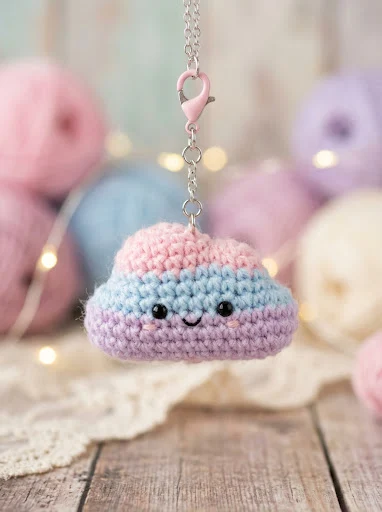
The strawberries and cream palette balances gentle warmth and clean simplicity by combining soft powder blush, delicate milky ivory, and pale sage green accents. This color concept relies on the subtle contrast between warm, desaturated pinks and cool, earthy undertones, evoking a classic springtime motif that feels both fresh and timeless. The ivory tone serves as a neutral canvas that softens the vibrancy of the blush, while the sage green introduces an organic touch that grounds the arrangement. When applied to miniature charms like micro berries, layered blossom pendants, or tiny animal figures, this colorway emphasizes delicate structural curves without harsh contrasts. The low-saturation blush reflects light evenly, ensuring that surface textures like surface slip stitches and miniature bobbles remain fully visible. This balance makes the strawberries and cream theme an enduring favorite for personal bag pendants and minimalist charm clusters.
To construct a charm using this palette, begin by working with the powder blush yarn to form the primary body or main petal elements, maintaining tight, uniform tension around an initial adjustable loop. Work single crochet rounds continuously in a spiral, increasing evenly to create a smooth, rounded base before introducing the milky ivory yarn through an invisible color change on the final pull-through. Utilize the ivory shade to build contrasting rim details, secondary petal layers, or delicate surface embroidery, burying all raw yarn ends securely through the center cavity. Fasten off the main components, then join the pale sage green fiber at the top apex to crochet a compact three-chain leafy calyx or hanging stem loop. Secure a polished silver or light gold jump ring directly beneath the base of the green stem loop using flat-nosed craft pliers, completing a durable, refined accessory ready for daily attachment.
2. Frosted Lavender and Mint Harmony

Read This:

Step-by-Step Guide
The frosted lavender and mint color scheme explores a serene cool-toned relationship, pairing powdery lilac purple with chilled seafoam mint and whisper-soft silver grey. This combination takes inspiration from early spring frost settling over morning garden foliage, creating an ethereal, modern aesthetic that feels tranquil and clean. The muted lavender acts as the primary visual anchor, offering soft depth that is brightened by the mint accents without creating sharp chromatic clashes. The pale silver grey serves as a neutral transition shade, bridging the gap between purple and green while giving the charm an intentional, balanced finish. This palette is especially effective for geometric designs, miniature succulents, celestial stars, and abstract pocket amulets, as the cool undertones make small stitched items appear crisp and refined.
Begin assembly by crafting the foundational core using the frosted lavender yarn, executing six single crochet stitches inside a magic ring using a 2.25 mm hook. Expand the circular diameter gradually across successive rounds until twelve or eighteen stitches are reached, keeping the fabric firm to ensure it holds dimensional shape under active use. Introduce the chilled mint yarn along the outer perimeter to construct textured picot edging, decorative shells, or contrasting foliage lobes, securing each stitch firmly into the back loops of the lavender base. Use the silver grey thread to embroider subtle starburst centers or French knots across the lavender face, ensuring consistent thread tension to prevent puckering. Fill the piece lightly with dense polyester stuffing before closing the final seam with an invisible decrease stitch. Thread a stainless steel lobster clasp onto a matching silver jump ring, pierce it through the reinforced seam apex, and crimp the ring shut.
3. Lemon Chiffon and Buttercream Sunrise
Execution Process
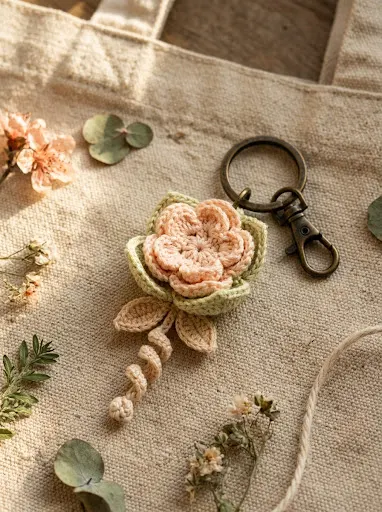
The lemon chiffon and buttercream sunrise concept delivers radiant, uplifting warmth by uniting pale pastel yellow, creamy warm buttermilk, and a touch of dusty apricot blush. This palette captures the gentle luminescence of early dawn, offering a sunny, cheerful disposition that remains soft and sophisticated rather than loud or intense. The lemon chiffon provides an airy, luminous quality that immediately draws the eye, while the rich buttercream grounds the composition with gentle, comforting warmth. Subtle apricot accents add depth to floral centers, miniature sunrise arcs, or animal cheeks, introducing natural warmth that enriches the monochrome yellow base. This color grouping is particularly suited for miniature breakfast motifs, smiling celestial charms, and textured daisy pendants, providing bright charm without relying on synthetic primary colors.
Commence by using the rich buttercream yarn to establish the stable inner foundation, working five single crochet stitches into an adjustable circle to form a dense, gap-free hub. Switch seamlessly to the pale lemon chiffon yarn by executing a slip stitch into the initial foundation loop, carrying the working tail underneath the active stitches to lock the color transition neatly inside. Build the outer petals or expanding dimensional body by working alternating half-double and double crochet clusters into each consecutive stitch, allowing the natural flare of the stitches to generate ruffled organic texture. Thread a length of the dusty apricot yarn onto a tapestry needle, then place tiny satin stitches or a singular bullion knot directly across the center to define the interior stamen. Weave all loose ends internally through the dense underside fabric, apply a light coat of textile sealant to the knot, and attach a warm-toned brass keychain split ring through the upper petal edge.
4. Sea Glass Mist and Aqua Foam

Setup Method
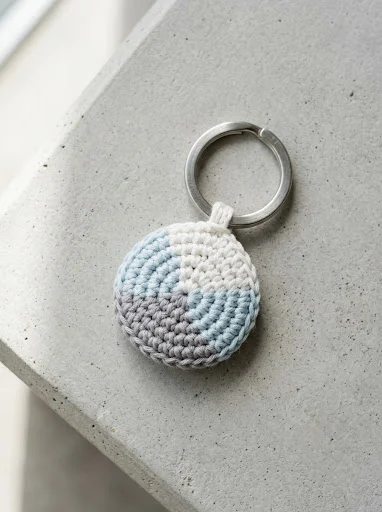
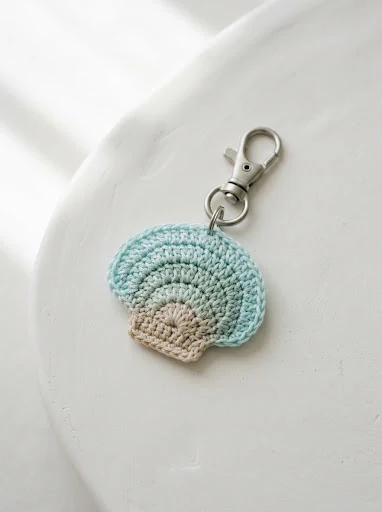
The sea glass mist and aqua foam palette captures an oceanic, coastal atmosphere through a delicate gradient of pale aqua, washed seafoam green, and soft sandy linen beige. Inspired by tumbled ocean glass and weathered shorelines, this combination projects an understated, organic charm that complements minimalist style and natural fiber accessories. The muted aqua delivers a crisp, refreshing blue-green presence, while the seafoam tone softens the overall visual weight, creating a smooth tonal transition. The sandy linen beige anchors the nautical theme with a neutral, textured tone that mimics coastal stone and dried seaside grasses. This colorway works well for miniature sea creatures, spiral shell pendants, water droplet charms, and smooth worry stones, where a soothing, tactile appearance is desired.
To build an ocean-inspired charm with this colorway, start with the sandy linen beige yarn, working a foundation chain of seven stitches to establish a flat, oblong base. Transition cleanly to the pale aqua fiber along the outer perimeter, working single crochet stitches in continuous spirals while utilizing back-loop-only placement to establish subtle horizontal ridges resembling aquatic ripples. As the dimensional shape tapers toward its upper crest, blend in the soft seafoam green yarn to complete the final rounds, executing gradual invisible decreases to close the volume smoothly. Lightly shape the interior with clean fiberfill, ensuring the stuffing remains firm without stretching the cotton stitches apart. Secure the final closure with a tapestry needle, drawing the yarn tail through the remaining front loops to form a flat, puckered crown. Fasten a matte silver swivel clip to the top closure using a heavy-gauge split ring, ensuring reliable attachment for keys or zipper pulls.
5. Spun Sugar and Lilac Dream
How to Create
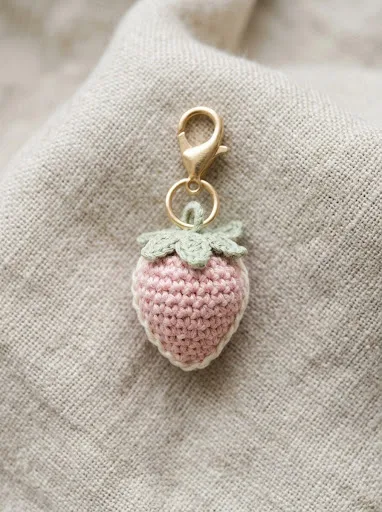
The spun sugar and lilac dream palette presents a whimsical, confection-inspired aesthetic by harmonizing pale cotton-candy pink, airy sky blue, and soft lilac purple. This classic pastel combination evokes nostalgic carnival treats and dreamy sunset skies, offering a playful, vibrant character that remains gentle on the eyes. The balanced values of pink and blue create a pleasant visual rhythm, while the intermediate lilac bridges both hues naturally across the color spectrum. When applied to miniature sweets, tiny clouds, or textured rainbow arches, this palette maintains a bright, friendly presence that appeals to fans of kawaii and pastel accessories. Because the three colors share identical light values, they interact smoothly without one shade dominating the overall silhouette.
Execute this design by working the three pastel shades in sequential alternating bands or coordinated structural panels, beginning with the spun sugar pink to establish the lower base or foundation curve. Maintain strict tension throughout each row, changing to the airy sky blue fiber at the midpoint by completing the final yarn-over of the transition stitch with the new shade. Continue the pattern using uniform single crochet stitches, incorporating the soft lilac purple along the final border rounds or dimensional cap to frame the primary elements cleanly. Weave all loose internal ends back and forth across their matching color blocks using a blunt needle to ensure internal tails remain completely hidden from the exterior. Attach miniature metallic bell findings or pastel acrylic charms along the lower perimeter using fine jewelry pins, then anchor a durable lobster clasp at the top using a reinforced slip-stitch loop.
6. Pistachio Cream and Pale Peach Blossom
Read This:
Execution Process
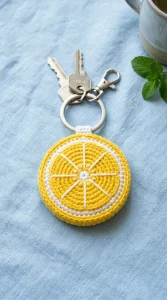
Pistachio cream and pale peach blossom provides a modern botanical balance, uniting creamy desaturated green with soft peach and warm almond ivory. This palette reinterprets classic floral imagery with an understated, contemporary approach, trading vivid greens and pinks for muted, artisanal undertones. The pistachio green acts as a smooth, milky neutral that supports the soft warmth of the peach blossom without visual competition. The almond ivory acts as an essential highlight, outlining petal edges or building contrasting centers that give the charm a crisp, well-defined silhouette. This colorway is well suited for miniature botanical charms, succulent rosettes, modern fruit pendants, and rustic farm-inspired accessories, lending a gentle aesthetic that pairs naturally with linen and canvas textiles.
Initiate the charm by working the central blossom or core structure in the pale peach yarn, executing eight half-double crochet stitches into a magic adjustable loop before securing with a slip stitch. Switch to the almond ivory yarn, chaining two and working textured petal shells around the circumference, inserting each cluster into the front loops to leave the rear loops accessible for subsequent foliage foundation rounds. Join the pistachio cream yarn directly into the exposed rear loops of the first round, crocheting outward to establish pointed sepals or supportive backing leaves that frame the peach blossom. Fasten off each color neatly, drawing all thread ends into the rear cavity where they can be knotted firmly and trimmed flush. Insert a small metal eyelet or thread a four-millimeter jump ring between two pistachio leaf points, attaching a matching antique bronze key ring to complete the piece.
7. Cloud Nine Grey and Powder Blue Serenity
How to Make
The cloud nine grey and powder blue serenity palette offers a clean, Scandinavian-inspired minimalism, combining soft dove grey, icy powder blue, and pure chalk white. This cool-toned arrangement provides a crisp, modern aesthetic that feels refined, tidy, and intentional. The dove grey introduces a contemporary neutral foundation that prevents the light blue from feeling overly juvenile, while the chalk white provides clean, high-contrast highlights that sharpen the overall motif. This palette is effective for architectural geometry, miniature weather motifs like rain clouds and raindrops, minimalist cubes, and understated monograms. The restrained color story complements neutral accessories, making it a reliable option for professional workspaces, understated key rings, and modern home decor accents.
Begin by using the pure chalk white yarn to establish the clean top profile or puffy upper cloud curves, working three adjacent bobble clusters separated by tight slip stitches across an initial foundation chain. Transition smoothly to the icy powder blue yarn along the lower edge, working flat rows of single crochet to build a smooth, tapered body that transitions downward from white to blue. Frame the entire outer edge by working a continuous border of tight slip stitches using the soft dove grey thread, maintaining relaxed tension around corner curves to keep the edges flat and uncurled. Fasten off with an invisible join, threading the tail through the back loops of the grey perimeter to hide the final knot. Mount a brushed steel split ring through the central apex of the white cloud cluster, ensuring the charm hangs straight and level when attached to a key ring.
8. Honey Oat and Muted Buttercup Warmth
Step-by-Step Guide
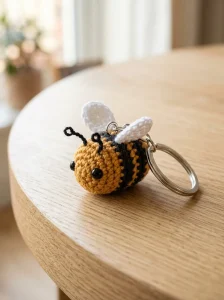
The honey oat and muted buttercup palette creates an earthy, wholesome aesthetic by combining soft, desaturated dandelion yellow with warm oat beige and gentle wheat tan. This color pairing draws direct inspiration from dry prairie grasses and wild honeycombs, offering a warm, cottagecore charm that feels grounded and cozy. The muted buttercup introduces a subtle burst of gentle sunshine, while the honey oat and wheat shades provide textured, natural warmth that feels timeless and understated. This combination works exceptionally well for miniature beehive charms, acorn pendants, rustic wild mushrooms, and small woven basket accessories, delivering a handmade aesthetic that pairs effortlessly with natural wood and leather accents.
Start construction by utilizing the warm oat beige yarn to form the textured base or lower cupule, working six single crochet stitches into a magic circle and expanding outward to twelve stitches over two gradual rounds. Introduce the muted buttercup yellow along the upper tiers, utilizing textured waistcoat stitches or front-post single crochet to build a raised, honeycombed surface texture with vertical depth. Introduce the wheat tan yarn around the upper closure, working a series of three-chain loop picots that provide a clean, gathered rim around the top opening. Pack the interior firmly with natural wool roving or recycled polyester batting, shaping the piece into a balanced, symmetrical teardrop form. Close the upper aperture using a blunt needle to weave through the remaining active loops, pulling the circle closed before stitching a reinforced five-chain loop at the top to hold a sturdy vintage bronze swivel clip.
9. Soft Mauve and Dusty Rose Romance

Setup Method
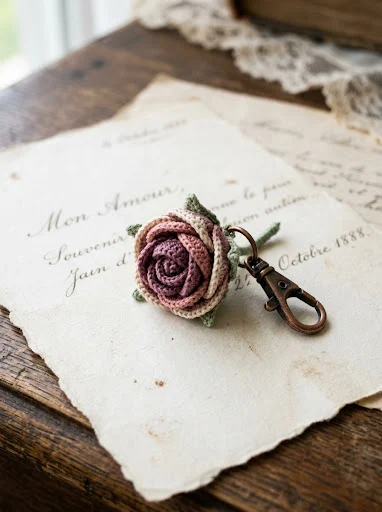
The soft mauve and dusty rose romance palette delivers vintage elegance through a sophisticated blend of muted dusty rose, antique mauve, and soft parchment cream. Moving away from bright bubblegum tones, this combination explores rich, desaturated berry hues that evoke pressed heirloom flowers and antique Victorian lace. The dusty rose acts as a warm, comforting mid-tone, while the deeper mauve provides gentle depth that defines petal clefts and recessed contours without harsh dark shadows. The parchment cream introduces a gentle, aged highlight that softens the transition between the two rose tones, giving the finished charm an understated, heirloom quality. This palette is suitable for miniature vintage cameos, dimensional rosebuds, textured heart pendants, and romantic lockets that call for a refined, classic touch.
To assemble this vintage-style charm, use the antique mauve yarn to build the recessed inner center, working six single crochet stitches into an adjustable ring and pulling the loop closed. Transition to the dusty rose yarn for the primary body, working alternating rows of single crochet and front-post stitches to produce raised ribs that spiral outward from the darker center. Introduce the parchment cream yarn around the final round, working delicate picot points or fine scallop edges along the exterior perimeter to mimic the appearance of antique tatting lace. Secure all yarn tails internally, weaving them through the dense stitches on the back side of the piece to maintain clean presentation on both faces. Thread an antique copper headpin or jump ring through the upper petal joint, securing it with round-nosed pliers to provide a stable anchor for a matching vintage key loop.
10. Periwinkle Breeze and Pale Apricot Fusion

Read This:
How to Create
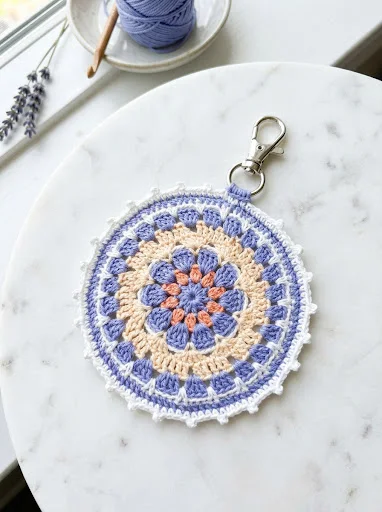
The periwinkle breeze and pale apricot fusion palette pairs soft complementary opposites, balancing unique blue-violet periwinkle with warm, creamy apricot and soft porcelain white. Sitting on opposite sides of the color wheel, blue-violet and soft orange create a subtle, pleasing vibration that brings miniature crochet charms to life without visual clutter. The periwinkle offers a distinctive, dreamy hue that feels modern and fresh, while the pale apricot introduces friendly warmth that keeps the cool blue from feeling distant. The porcelain white provides clean breathing room between the two tones, allowing both gentle colors to shine clearly. This palette works wonderfully for miniature citrus blossoms, abstract modern geometric disks, playful pinwheels, and colorful bag charms.
Begin by casting on with the periwinkle breeze yarn, constructing a flat circular base of twelve double crochet stitches worked into an adjustable magic loop, closing the round with an invisible join. Fasten off the periwinkle thread and introduce the pale apricot yarn into the front loops of the outer rim, working small shell clusters consisting of one single crochet, three double crochets, and one single crochet into every second stitch. Use the porcelain white yarn to work slip stitches along the exposed back loops of the original periwinkle circle, creating a clean white halo that frames the apricot petals from behind. Fasten off all three yarns, guiding the ends to the center back and securing them with a flat reef knot before burying the tails inside the fabric. Finish by threading a bright silver eyelet ring through the base of a petal junction, securing a durable swivel lobster clasp to complete the charm.
Common Beginner Mistakes and How to Avoid Them
When working with pastel yarns on miniature crochet charms, beginners frequently encounter specific color-matching and construction challenges that can compromise the finished look. A common mistake is combining pastel shades with mismatched undertones, such as pairing a warm, yellow-based peach with an icy, blue-based pink; this clashing temperature can make the finished charm appear muddy or poorly coordinated. To avoid this, always swatch your colors side-by-side in natural daylight before starting the project to confirm their temperatures align comfortably. Another frequent issue is choosing fiber with loose ply twists or rough acrylic finishes; loose fibers split easily with small hooks, creating visible fuzz that obscures neat stitch lines. Selecting tightly plied mercerized cotton keeps stitch outlines crisp and clean. Finally, makers often pull surface embroidery threads too tight when adding facial details or petal veins to pastel bases. This overtightening puckers the light-colored fabric and distorts the charm’s outline. Always maintain a relaxed hand when embroidering accents, anchoring your working threads securely behind internal stuffing rather than pulling them against surface stitches.
Practical Tips for Better Results
Elevating miniature pastel crochet charms from simple crafts to professional-quality accessories requires careful attention to hook sizing, invisible joining methods, and neat hardware finishing. Always choose a crochet hook that is one half-millimeter to one full millimeter smaller than the manufacturer’s recommendation on the yarn label. This tight gauge ensures dense, opaque stitches that prevent white polyester stuffing from showing through pastel fabrics. When switching between pastel shades along flat rounds, use the invisible color change technique by completing the final yarn-over of the preceding stitch with the incoming color, ensuring clean, stepped transitions without visible color jog lines. Light steam blocking makes a noticeable difference for flat charms like petals, leaves, and geometric medallions; pin the unadorned pieces to a foam blocking board and apply a gentle pass of cool steam to relax the fibers and sharpen the edges. Lastly, always use smooth, flat-nosed jewelry pliers when attaching metal key rings and clasps to avoid scratching the hardware or snagging neighboring cotton threads during final assembly.
Styling, Presentation, or Organization Ideas
Pastel crochet charms offer exceptional versatility for personal styling, modern home decor, and professional craft displays. These miniature accessories can be clipped onto natural canvas tote bags, neutral leather backpacks, or metal key sets, adding an artisanal pop of color without overwhelming minimalist outfits. For craft fair displays or online shops, present charms pinned cleanly onto custom heavy cardstock backing cards printed in muted neutral tones; this provides structural support while highlighting the delicate pastel fiber. In home and office spaces, these charms can serve as decorative accents when hung from curtain tiebacks, decorative drawer pulls, or pegboard tool walls, organizing scissors, measuring tapes, and craft tools with charming color coding. Grouping two or three complementary pastel charms along a single central ring also creates a balanced, multi-textured cluster pendant that adds depth to everyday carry items. Maintaining an organized storage box with clear, lidded compartments keeps finished charms dust-free and neatly sorted by color palette, making it easy to select the perfect accessory at a glance.
Budget or Time Planning
Creating miniature crochet charms with curated pastel palettes is an efficient, cost-effective creative project that yields satisfying results with minimal investment. Because each miniature charm uses only five to fifteen yards of yarn, a standard fifty-gram skein of pastel cotton yarn can produce numerous finished pieces, keeping material costs remarkably low per charm. Crafters can stretch their budget further by sourcing multi-skein pastel assortment packs, which provide balanced color ranges without requiring the purchase of full individual skeins. When planning your production schedule, work in coordinated batches rather than completing charms individually from start to finish. Dedicate a focused block of time to crocheting all the primary bases in one color, switch to the secondary shade to construct all accent pieces, and finish by stuffing and closing all charms together. This assembly-line workflow builds muscle memory, reduces overall completion time to roughly twenty to thirty minutes per charm, and helps makers build substantial inventory for seasonal markets, holiday gifts, or personal collections efficiently.
Creative Expansion and Advanced Inspiration
Once you are comfortable with basic pastel charm designs, incorporating mixed-media elements and advanced fiber techniques can elevate your miniature projects even further. Consider incorporating micro-macramé cords, natural unvarnished wooden beads, or delicate glass seed beads into your hanging loops to introduce contrasting textures alongside the matte crochet stitches. Advanced crafters can experiment with micro-crochet using fine lace-weight sewing thread and a 0.6 mm hook, creating delicate, coin-sized pastel charms suitable for earrings, necklace pendants, or charm bracelets. Another engaging direction is infusing stuffed charms with dried natural botanicals; blending a small pinch of dried lavender buds or chamomile flowers into the polyester stuffing turns a simple bag charm into a subtle, soothing pocket sachet. Finally, try blending complementary embroidery techniques onto your finished pastel bases, such as delicate bullion knot roses or tiny French-knot daisies, adding rich three-dimensional detail that transforms simple geometric charms into miniature works of heirloom fiber art.