Beaded craft projects offer an engaging, artistic medium for adults seeking to create functional accessories, intricate home accents, and sculptural artwork. Modern adult beading transcends simple stringing projects by incorporating geometric bead weaving, wire wrapping, loom tapestry methods, and architectural structural design. Readers exploring this comprehensive guide will acquire practical expertise regarding tension regulation, substrate selection, bead sizing standards, and specialized finishing hardware across ten distinct craft concepts. Understanding how seed beads, natural stone rondelles, polished crystals, and wooden spheres interact with varied cordage allows artisans to produce durable, gallery-grade handmade pieces. This guide provides structured step-by-step methodologies, professional material checklists, and structural planning considerations to help you execute complex beaded patterns with complete confidence. Mastering these foundational beading and weaving techniques eliminates structural sagging, ensures lasting tensile strength, and delivers an elevated aesthetic suitable for modern home decor, wearable fashion accessories, and personalized gift installations.
Why This Idea Is Trending or Useful
Beaded crafts continue to experience a widespread revival across modern Pinterest inspiration boards because they blend mindful tactile engagement with refined modern design sensibilities. Adult crafters gravitate toward beadwork as a productive screen-free pursuit that yields durable, display-worthy objects featuring rich geometric textures and customized color palettes. The DIY appeal and accessibility for beginners stem from the low barrier to entry regarding workspace and basic tools; a flat table, specialized beading needles, and basic pliers are sufficient to begin intricate creative projects. Furthermore, these designs embrace a clean minimalist style that adapts seamlessly to bohemian textiles, contemporary table settings, and modern jewelry collections without requiring industrial machinery. By transforming basic materials into intricate patterns through structured repetitions, beading provides an accessible creative project framework that produces long-lasting decorative value while fitting comfortably into modest personal budgets.
Materials and Preparation
Executing flawless beaded craft projects requires assembling high-grade components, calibrated cords, and specialized hand tools before beginning initial pattern mapping. Essential hardware includes Japanese precision glass seed beads in sizes 11/0 and 8/0, faceted crystal bicones, natural hardwood beads, memory wire, flexible multi-strand nylon-coated stainless steel beading wire, braided beading thread, and assorted metal findings such as crimp tubes, wire guardians, and lobster clasps. Necessary tools comprise flush cutters, round-nose pliers, chain-nose pliers, split-ring tweezers, beading trays lined with synthetic velvet to prevent rolling, and collapsible eye needles. Preparation begins by wiping down a flat work surface and establishing focused directional task lighting to minimize optical fatigue during detailed thread work. Lay out your design pattern across a calibrated beading board to verify measurement lengths and preview color sequence distributions before stringing a single element. Conditioning nylon beading threads with microcrystalline wax or synthetic beeswax prevents tangling, reduces surface fraying, and stabilizes stitch tension throughout the assembly process.
10 Beaded Craft Ideas For Adults
Idea 1: Geometric Peyote Stitch Beaded Cuff Bracelet
Step-by-Step Guide
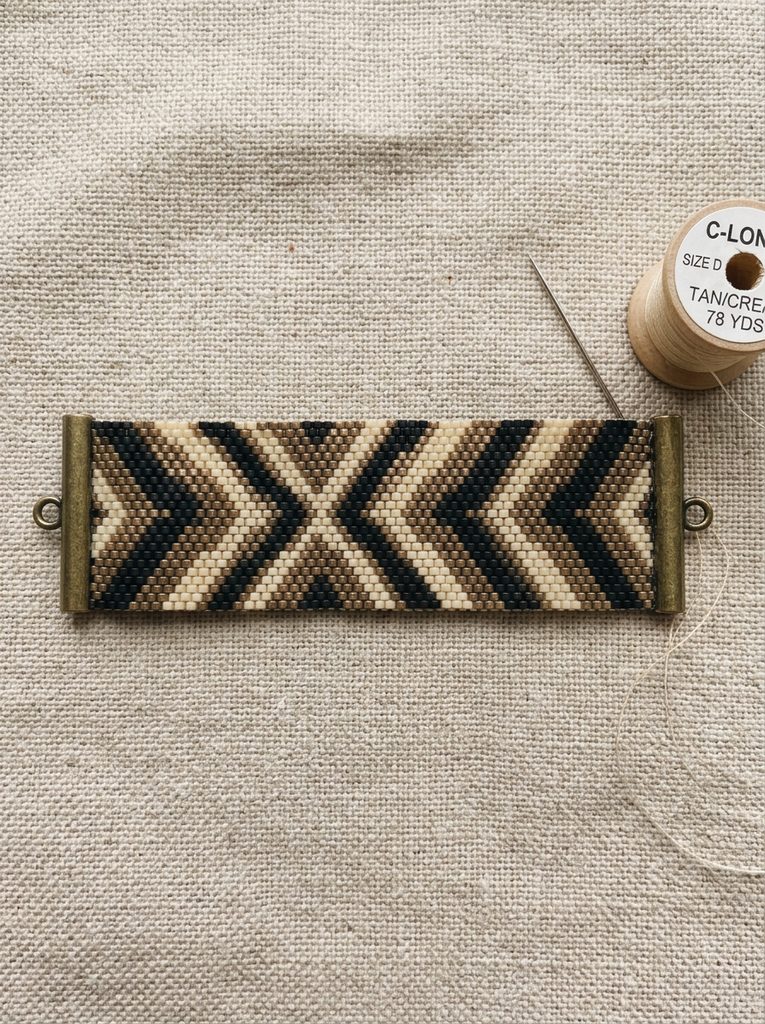
The geometric peyote stitch cuff bracelet utilizes flat even-count peyote weaving to construct a dense, fabric-like band of Japanese cylinder beads displaying sharp Scandinavian chevron patterns. Cylinder beads feature uniform tubular dimensions and wide inner diameters, allowing multiple thread passes that lock adjacent beads into an unbroken, flat mosaic surface. The geometric motif relies on alternating matte black, opaque cream, and brushed metallic bronze beads to establish clean visual contrast that complements tailored wardrobe cuffs. Unlike strung jewelry, a peyote-stitched cuff bends with supple, textile-like fluidity around the wrist while maintaining high lateral tensile stability. This piece serves as a sophisticated modern accessory that introduces refined artisan craftsmanship into everyday business-casual or minimalist evening ensembles.
To weave this bracelet, cut a five-foot length of bonded nylon beading thread, condition the strand with thread wax, and thread a size 12 beading needle. String an even number of size 11/0 cylinder beads, such as sixteen beads, to establish the base row, anchoring a temporary stop bead three inches from the tail end. Pick up one bead for row three, skip the final bead of the base row, and pass the needle through the next bead along the line, pulling tension snug so the new bead sits elevated above the previous row. Continue this alternating pass across the entire row, turning the work at the margin and weaving backward through the protruding beads to build the geometric chevron sequence row by row. Maintain firm, even thread tension to keep bead rows aligned without warping the rectangular silhouette. Conclude the cuff by tapering the final four rows, weaving thread tails back through previous bead channels across six diagonal rows, and securing a sliding tubular slide clasp using reinforced ladder stitches.
+-------------------------------------------------------------+
|             EVEN-COUNT PEYOTE WEAVE PROFILE                 |
+-------------------------------------------------------------+
|   Row 3:  [ Bead ]       [ Bead ]       [ Bead ]            |
|              |              |              |                |
|   Row 1:  [ Base ]-------[ Base ]-------[ Base ]            |
|                 \              \              \             |
|   Row 2:         [ Inter ]      [ Inter ]      [ Inter ]    |
+-------------------------------------------------------------+
Idea 2: Sculptural Wooden Bead Botanical Garland
How to Create
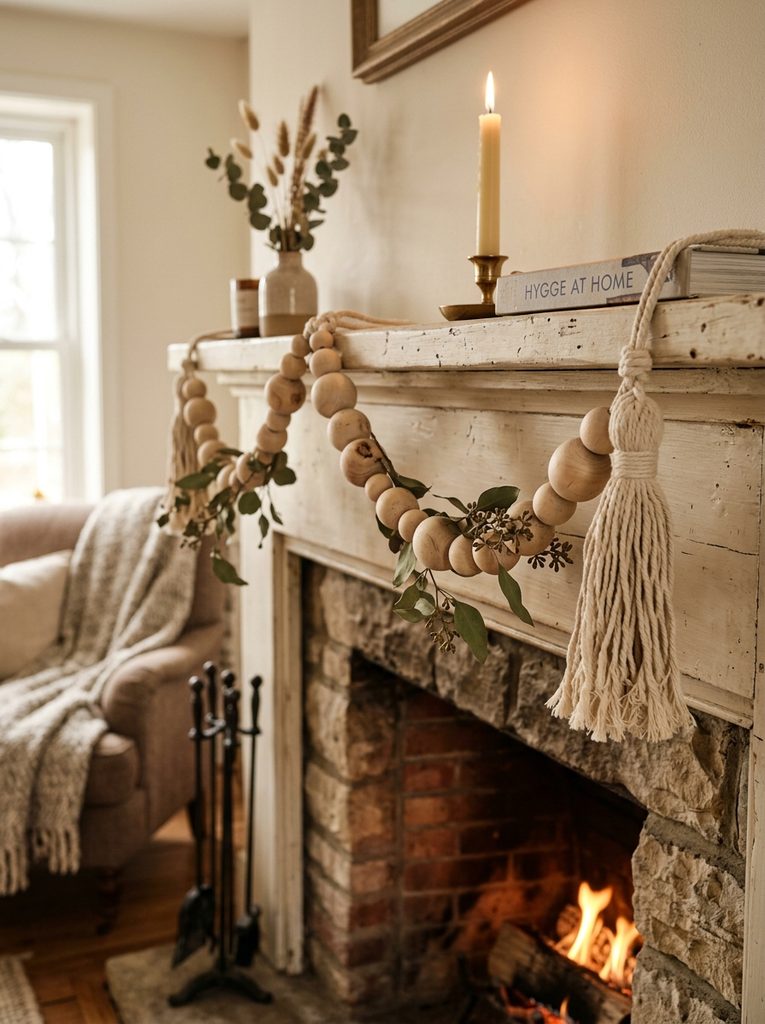
The sculptural wooden bead botanical garland combines raw natural timber spheres of varying diameters with unbleached natural cotton cord to create a versatile architectural home decor accent. This design alternates polished birch beads measuring twelve, sixteen, and twenty-five millimeters with hand-knotted macrame spacers and preserved eucalyptus stems. The juxtaposition of smooth spherical wood grains against fibrous cotton cord delivers an understated Scandinavian aesthetic that softens hard mantel edges, shelving displays, and decorative ceramic bowls. The open spacing between grouped beads provides flexible articulation, allowing the garland to drape gracefully across varied domestic surfaces without kinking. This craft provides an accessible entry point for adults seeking to produce large-scale decorative elements with minimal specialized hardware.

Begin by measuring and cutting an eight-foot length of three-millimeter braided cotton cord, securing one end with a tightly wrapped overhand loop knot to form a hanging loop. Slide five twelve-millimeter natural birch beads onto the cord, followed by three sixteen-millimeter beads, and center a single twenty-five-millimeter focal sphere within the grouping. Tie a secure square knot or double overhand knot flush against the final bead of the cluster to immobilize the wooden elements along the cord axis. Repeat this sequential grouping rhythm across the entire length of the cotton strand, leaving two inches of exposed cord between clusters to preserve natural drape. At the terminal end, construct a dense five-inch cotton tassel around a cardboard jig, bind the neck tightly with matching cotton twine, and tie the tassel directly into the final cord loop. Trim stray fibers with shears to achieve a clean, blunt edge across the bottom of the tassel.
Idea 3: Wire-Wrapped Raw Crystal and Glass Suncatcher
Execution Process
The wire-wrapped raw crystal and glass suncatcher utilizes architectural brass armature wire to suspend faceted lead-crystal prisms, pressed glass leaves, and raw quartz points within sunny window frames. The geometric brass frame is hand-formed into interlocking teardrop or diamond silhouettes, providing an open interior canvas for delicate beaded wire spokes. When natural daylight passes through the multi-faceted crystal beads and glass rondelles, it refracts vivid rainbow prisms across interior walls, energizing living rooms, sunrooms, and home offices. The contrast between rigid industrial brass framing and sparkling optical glass creates a dynamic art piece that remains visually captivating throughout changing daylight hours.

Start by shaping a sixteen-gauge solid brass wire around a cylindrical mandrel to construct a six-inch primary geometric outer ring, hammering the overlapping wire ends flat and securing them with tight wraps of twenty-four-gauge brass binding wire. Cut several twelve-inch lengths of twenty-six-gauge craft wire to serve as interior stringing spokes, anchoring one end of each spoke to the perimeter ring with three tight wraps. Thread an assortment of faceted eight-millimeter crystal beads, micro-seed beads, and iridescent rondelles onto each internal wire spoke, bridging the central cavity in an asymmetric starburst arrangement. Anchor a heavy thirty-millimeter faceted crystal prism drop at the lowest point of the frame using a wrapped wire loop. Attach a sturdy brass hanging chain to the top apex of the wire frame, verifying balance by suspending the piece from a temporary hook and adjusting bead positions along the spokes to maintain vertical alignment.

Idea 4: Round Wood and Seed Bead Coaster Set
Setup Method
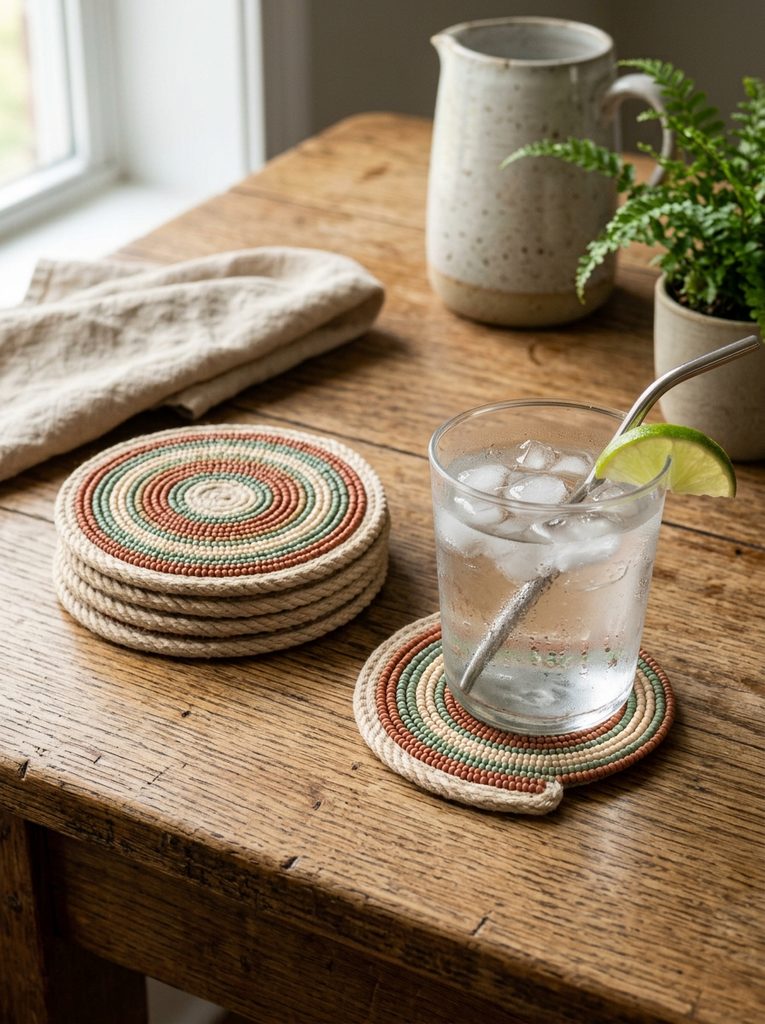
The round wood and seed bead coaster set combines spiral-coiled cotton cord substrates with densely stitched glass seed beads to produce heat-resistant, absorbent drink coasters. This functional home decor project utilizes a spiral applique technique where strung beads are couched flat onto a thick braided cotton clothesline base using clear nylon thread. The circular geometric design incorporates concentric rings of earthy terracotta, sage green, and cream seed beads, delivering a tactile, modern southwest aesthetic. The rigid, dense construction shields polished wood tables from moisture condensation and thermal transfer while remaining lightweight and durable for daily kitchen and living room use.
Prepare for construction by coating six yards of four-millimeter solid-braided cotton clothesline with fabric stiffener, allowing it to dry until pliable yet structurally stable. String three feet of size 8/0 glass seed beads onto a continuous spool of bonded nylon thread. Begin coiling the cotton cord tightly at its center point, using a sharp hand-sewing needle to pass thread through adjacent cord coils in a whipstitch pattern to form a flat circular base. As you advance the outer spiral, guide the pre-strung seed beads along the top seam between cord rings, taking a locking couch stitch over the beading thread after every third bead to anchor the glass elements flat against the cotton. Continue coiling and bead-couching outward until the coaster achieves a uniform four-inch diameter. Taper the terminal end of the cotton cord by shaving the core fibers diagonally, sew the tip flush against the outer rim, and backstitch the beading thread securely through five internal coils.
Idea 5: Beaded Fringe Statement Chandelier Earrings
Step-by-Step Guide
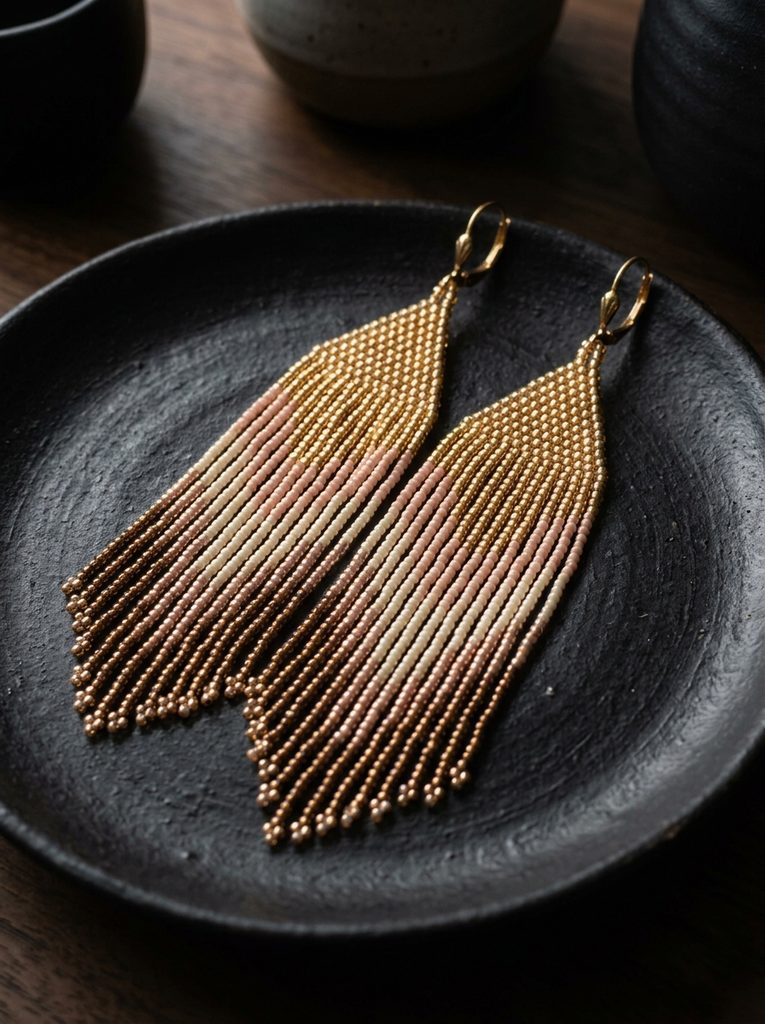
Beaded fringe statement chandelier earrings utilize brick stitch triangular headers paired with long, cascading seed-bead fringe lines that sway dynamically with head turns. The solid brick stitch foundation establishes a stable geometric anchor against a metal ear wire, holding the top fringe strands evenly spaced across the lower horizontal edge. Utilizing high-grade metallic seed beads, matte pastels, and teardrop terminal drops produces an eye-catching ombre gradient that elongates the neck profile. The absence of stiff wire allows the individual fringe strands to move like liquid silk, creating an elegant, dramatic accessory suitable for upscale evening events and gallery receptions.
To construct a matching pair of earrings, cut a four-foot strand of fine nylon beading thread and attach a size 12 beading needle. String two size 11/0 seed beads, passing the needle through both beads twice to establish a horizontal ladder-stitch base. Build consecutive rows of brick stitch upward, decreasing one bead per row to create a clean triangular header that terminates in a single top bead. Loop the working thread through a sterling silver ear wire loop three times at the apex, reinforcing the connection by weaving back down through the outer diagonal edge to the base row. Emerge from the first base bead, string thirty seed beads in your chosen color gradient, add a terminal three-millimeter drop bead, bypass the drop bead, and pass the needle straight back up through all thirty fringe beads into the header. Repeat this vertical fringing process across every base bead, keeping thread tension supple to prevent stiff curling, before securing the tail thread with half-hitch knots inside the brick stitch foundation.
Idea 6: Minimalist Beaded Plant Hanger with Brass Accents
How to Make
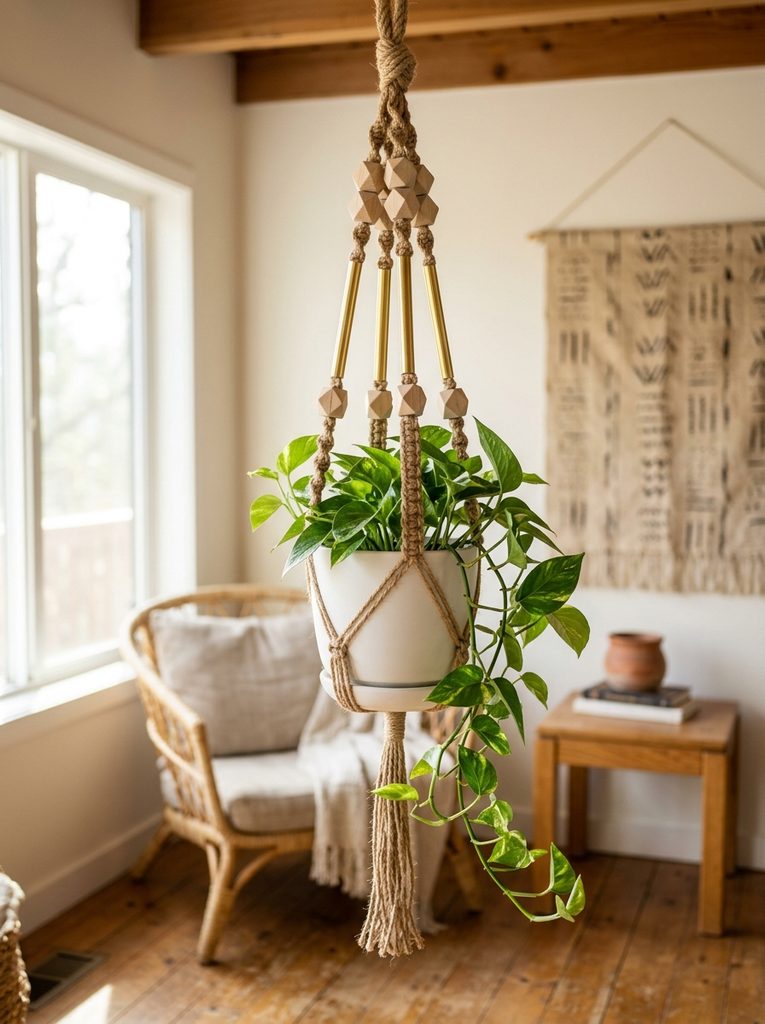
The minimalist beaded plant hanger pairs durable natural jute twine with oversized geometric wooden beads and raw brass tube sleeves to elevate indoor houseplant displays. By replacing dense, knot-heavy traditional macrame with clean, linear twine drops punctuated by sculptural timber hardware, this design achieves an airy, architectural presence that suits modern indoor aesthetics. The beads act as functional junction points, securing intersecting twine pairs to form a stable structural cradle that holds ceramic flower pots securely. Suspending trailing foliage—such as pothos, philodendrons, or string of hearts—in this refined hanger draws the eye upward, optimizing vertical space across compact apartments and brightly lit window nooks.
Begin by cutting eight twelve-foot lengths of two-millimeter natural jute twine, gathering them together and threading the midpoint through a two-inch solid brass suspension ring. Fold the strands in half to create sixteen six-foot working leads, binding them beneath the ring with a tight two-inch wrapping knot made from auxiliary twine. Group the working leads into four distinct four-strand panels. Thread each four-strand group through an alternating sequence of one-inch geometric hexagonal wood beads, two-inch brass tubes, and smooth round wood spheres, securing each bead cluster with a clean overhand knot underneath. At a point eighteen inches below the upper bead sequence, cross two outer strands from adjacent groups and pass them together through an eight-millimeter wood bead to form the basket mesh. Repeat this basket interconnection across all four groups, gather all sixteen terminal cords four inches below the basket nodes, and secure them into a substantial gathering knot beneath the ceramic pot base.
Idea 7: Loom-Woven Beaded Bookmark with Silk Tassel
Execution Process
The loom-woven beaded bookmark uses a traditional wire or timber bead loom to create an ultra-flat, flexible ribbon of glass seed beads featuring intricate modern art deco motifs. Weaving on a loom allows crafters to align hundreds of tiny seed beads into precise perpendicular rows and columns, enabling the execution of complex typography, geometric gradients, or botanical silhouettes. The finished woven strip is exceptionally thin and flexible, allowing it to rest smoothly between book pages without damaging binding glue or paper stock. Accenting the terminal ends with metal ribbon clamps and a fine silk embroidery floss tassel delivers a luxurious, heirloom-quality reading accessory.
Set up a tabletop bead loom by stringing eleven warp threads of fine bonded beading thread under uniform high tension across the loom rollers, creating ten individual bead channels. Thread a size 10 beading needle with five feet of weft thread, tying the tail to the outermost left warp thread. String ten size 11/0 glass seed beads according to your charted pattern, bringing the strand underneath the warp threads and pressing each bead upward with your index finger so one bead sits inside each channel. Pass the needle back through the interior hole of all ten beads from right to left, ensuring the needle passes completely above the warp threads to lock the glass beads onto the grid. Continue weaving rows until the bookmark measures seven inches in length. Cut the warp threads off the loom with three inches of excess, tie adjacent warp pairs into secure surgeon knots, fold the thread ends under a textured metal ribbon crimp end, and attach a handmade four-inch silk floss tassel using a split ring.

Idea 8: Wire-Sculpted Beaded Bonsai Tree Sculpture
Setup Method
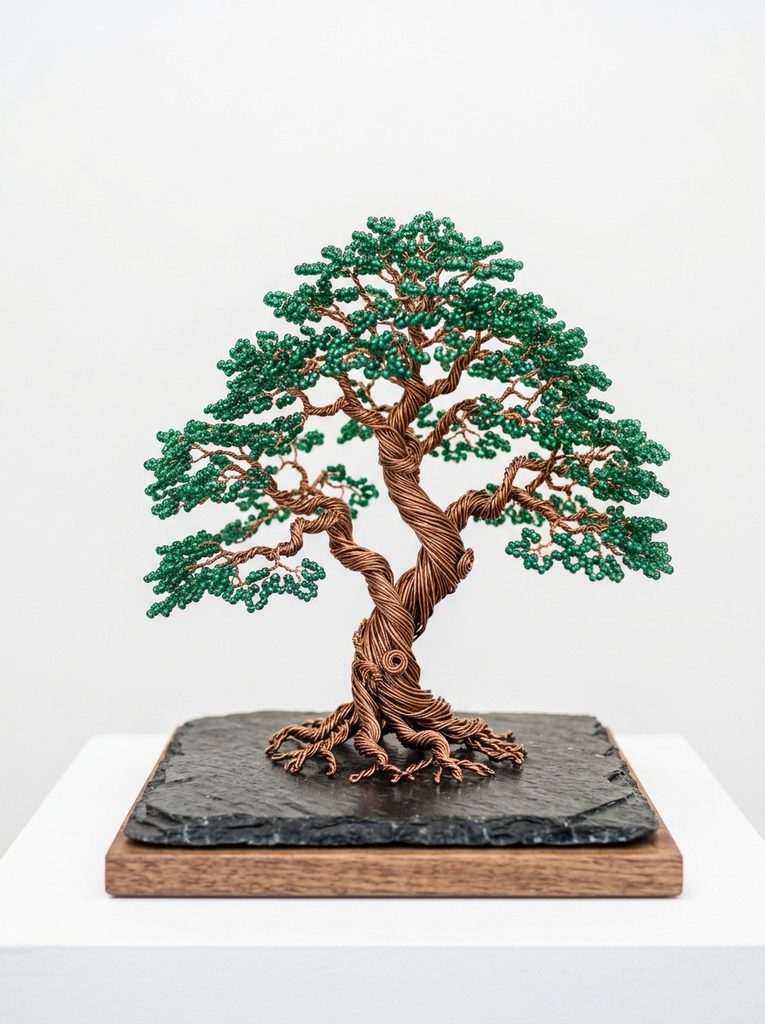
The wire-sculpted beaded bonsai tree sculpture transforms flexible craft wire and hundreds of colored glass seed beads into an intricate, three-dimensional miniature botanical display mounted on a natural stone base. The sculpture utilizes continuous branch loops where green, amber, or cherry blossom pink glass beads form dense foliage clusters anchored to twisted wire twigs. Multiple wire twigs twist together to build substantial branches, which eventually converge into a thick, textured tree trunk displaying natural bark-like striations. Mounted atop a polished granite slab or inside a shallow ceramic dish, this maintenance-free botanical sculpture serves as a striking centerpiece for coffee tables, credenzas, and executive office desks.
To construct the tree, cut forty thirty-inch lengths of twenty-four-gauge copper or aluminum craft wire. Take one wire strand, string eight size 11/0 green glass seed beads to its center, and twist the wire ends beneath the beads for six revolutions to form a tight foliage leaf loop. Repeat this process along the same wire to create five distinct foliage loops, then fold and twist the wire tails together to establish a single leaf cluster branch. Repeat this assembly across all forty wire lengths until forty individual foliage twigs are complete. Group the twigs into bundles of four, twisting the stems together to construct ten primary branches. Combine the primary branches progressively downward, twisting the wire bundles into a dynamic, gnarled tree trunk with exposed surface roots at the base. Anchor the root structure to a flat slate base using clear two-part epoxy adhesive, surrounding the trunk base with decorative fine gravel and preserved reindeer moss.
Idea 9: Embellished Felt and Bead Embroidered Brooch
Step-by-Step Guide
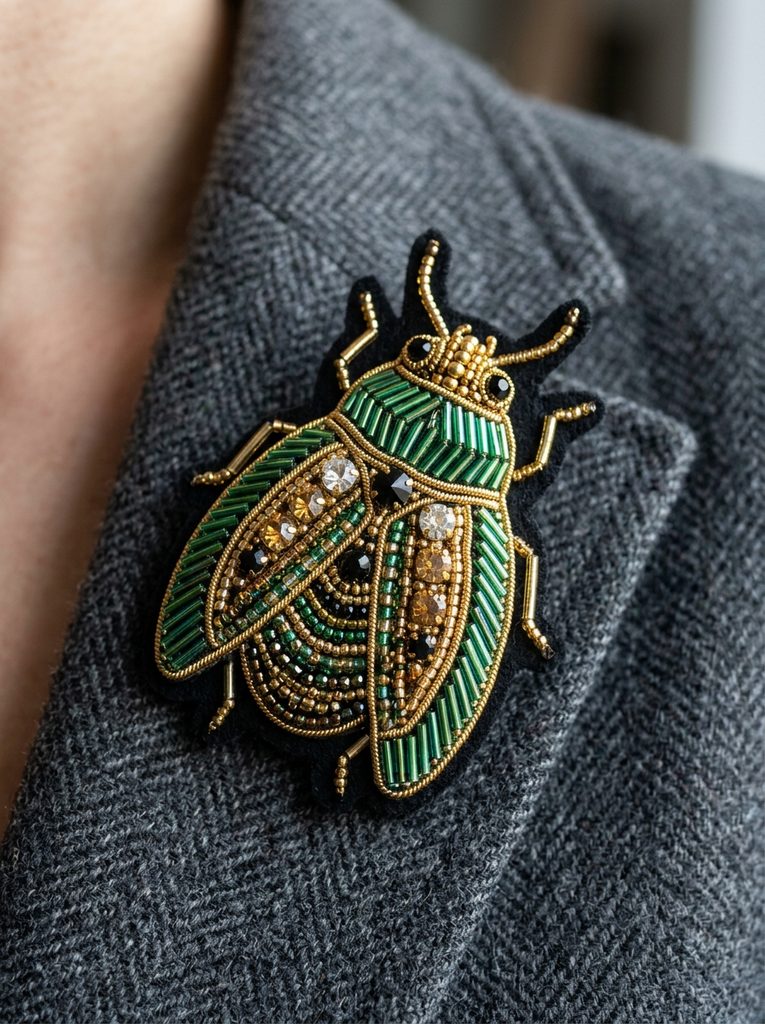
The embellished felt and bead embroidered brooch utilizes haute couture tambouring and surface embroidery techniques to craft a dimensional wearable art pin displaying organic beetle, floral, or moth motifs. This design combines varied glass materials—including bugle beads, faceted sew-on crystal stones in metal cup settings, micro-seed beads, and metallic French bullion wire—stitched onto an unyielding stiff felt backing. The layered topography creates dramatic tactile contrast, allowing light to catch faceted glass angles and smooth metal coils simultaneously. When fastened to a heavy wool coat lapel, canvas tote bag, or knit sweater, this handmade pin delivers an opulent, personalized statement that elevates basic outerwear garments.
Begin by transferring your chosen silhouette outline onto a piece of heavy, non-woven stiff polyester foundation felt using a silver gel pen. Stitch a central sparkling crystal cabochon in a metal prong setting to the center of the design using double-waxed beading thread. Outline the perimeter of the motif with a continuous row of metallic purl wire or size 11/0 seed beads using a sturdy backstitch method, securing two beads per stitch pass for clean structural stability. Fill the internal zones using directional bugle beads and graded seed beads, alternating angles to mimic natural textures like insect wing veins or flower petals. Cut out the completed bead embroidery with fine embroidery scissors, leaving a one-millimeter felt border. Back the piece with a scrap of thin cardboard and a piece of supple faux suede fitted with a safety-locking pin bar, sealing the edge perimeter with an enclosing blanket stitch accented with size 15/0 micro-seed beads.
Idea 10: Memory Wire Multi-Strand Beaded Wrap Bracelet
How to Make
The memory wire multi-strand wrap bracelet offers a versatile, durable jewelry craft that maintains its coiled circular shape permanently without requiring clasps or complex tension knotting. Memory wire is tempered carbon steel engineered to snap back into its factory-formed loop diameter, creating the visual effect of an organized stack of individual bracelets while functioning as a single, easily donned accessory. Combining varied bead textures—such as natural stone chips, matte glass cubes, metallic saucer spacers, and smooth freshwater pearls—across four continuous coils produces an eclectic, high-end look. This beginner-friendly project is exceptionally practical for adults with limited hand dexterity, as the finished bracelet simply wraps around the wrist effortlessly.
Prepare for assembly by selecting a spool of heavy-duty bracelet-sized steel memory wire, cutting a continuous four-coil segment using specialized memory wire shears; never use standard jewelry flush cutters, which will dent against tempered steel. Using heavy-duty round-nose pliers, bend one cut wire tip outward into a tight, complete three-millimeter safety loop to prevent beads from slipping off the coil. Thread your pre-planned sequence of beads onto the open end of the wire, mixing smooth stone rondelles with faceted glass and metal accents to establish visual rhythm throughout the loops. Pack the beads snugly along the wire curvature without over-tightening, ensuring the metal wire retains adequate flexibility to expand over the hand. Once the coils are filled to within a half-inch of the remaining end, use your round-nose pliers to roll the terminal wire tip into a matching closed loop, finishing by hanging a miniature metal charm or bead drop from each looped end using jump rings.

Common Beginner Mistakes and How to Avoid Them
When venturing into adult beaded craft projects, several common technical errors can compromise the structural durability, aesthetic appeal, and functional longevity of your handmade items. One frequent mistake is utilizing improper thread tension during off-loom bead weaving like peyote or brick stitch; pulling thread too tightly causes the beadwork to buckle and curl into an irregular cup shape, while loose tension creates sloppy gaps where bare thread remains visible between beads. Maintain a steady, relaxed tension, guiding each bead flat with your fingertips before pulling the loop taut. Another critical error is utilizing household thread, cotton sewing thread, or low-grade monofilament fishing line for jewelry projects; these fibers lack abrasion resistance and degrade rapidly against the sharp glass edges of cut seed beads, resulting in snapped strands. Always select specialized bonded nylon beading threads or multi-strand nylon-coated stainless steel beading wires. Beginners also frequently use incorrect cutting tools on tempered steel memory wire, permanently ruining delicate jewelry pliers; always invest in specialized hard-wire cutters designed specifically for high-tensile steel.
Practical Tips for Better Results
Achieving professional, gallery-grade results with adult beaded crafts relies on disciplined workspace preparation, proper lighting, and systematic bead calibration. Always utilize a synthetic bead mat or plush velvet bead board when working; these textured surfaces stop glass beads from rolling away, protect delicate crystal facets from chipping against hard tabletops, and allow you to scoop up tiny beads smoothly using needle tips. Invest in calibrated Japanese seed beads rather than irregular craft-grade glass beads, as uniform bead lengths and hole diameters ensure that geometric stitch patterns lay perfectly flat without unsightly lumps. When stringing heavy natural stone or glass beads on wire, always reinforce terminal loops using wire guardians—curved metal horseshoes that shield the core wire from friction against clasps and jump rings. Furthermore, always secure flexible beading wire using seamless brass crimp tubes rather than cheap crimp beads, flattening them systematically with a specialized two-step crimping plier that folds the metal tube into a rounded, burr-free anchor that never slips under daily wear.
+--------------------------------------------------------------------+
|               BEADWORK QUALITY & STABILITY PROTOCOL                |
+--------------------------------------------------------------------+
|  1. Condition nylon threads with wax to prevent knots and fraying. |
|  2. Utilize Japanese cylinder beads for flat, even geometric rows. |
|  3. Protect wire ends from friction damage using wire guardians.   |
|  4. Secure stringing wires with crimp tubes using crimping pliers. |
|  5. Inspect terminal knots and apply micro-dabs of jewelry cement. |
+--------------------------------------------------------------------+
Styling, Presentation, or Organization Ideas
Styling and organizing your beaded crafts transforms individual projects into cohesive decorative installations that elevate your home environment and wardrobe presentation. Display sculptural beaded wooden garlands and botanical wire suncatchers alongside ceramic vases, raw linen runners, and natural indoor greenery on open living room shelving to highlight organic textures. For beaded jewelry collections, construct a custom wall-mounted hanging organizer using framed linen pinboards or brass wire grids, hanging statement fringe earrings and multi-strand wrap bracelets neatly to prevent delicate fringes from tangling. When organizing your raw beading materials at home, utilize transparent acrylic tackle boxes or stackable screw-top laboratory jars categorized by color palette, finish, and bead millimeter size. Storing your glass seed beads, crystals, and metal findings in clear, labeled containers not only protects supplies from airborne dust and moisture oxidation but also provides immediate visual inspiration when planning your next complex geometric design or colorway.
Budget or Time Planning
Engaging in adult beaded craft projects represents a highly cost-effective, time-efficient creative pursuit that delivers bespoke luxury items at a fraction of retail boutique prices. A foundational starter investment of thirty to fifty dollars easily covers high-quality Japanese seed beads, a spool of nylon thread, needles, beading wire, crimp tubes, and an entry-level three-piece jewelry plier set, providing sufficient supplies to complete several detailed accessories. In terms of time allocation, projects can be selected to fit varying personal schedules: rapid projects like the memory wire wrap bracelet or wooden bead garland require only one to two hours of assembly, making them ideal for a single weekend afternoon. More complex textile-like designs, such as the peyote stitch cuff bracelet or the loom-woven bookmark, require eight to twelve hours of focused stitching, which can be broken down into relaxing thirty-minute daily sessions. Planning your design on paper before purchasing supplies prevents over-buying specialized materials, ensuring your crafting budget remains focused on versatile, high-grade essentials.
Creative Expansion and Advanced Inspiration
Once you have mastered these ten foundational beaded craft techniques, several advanced design avenues can expand your artistic repertoire and elevate your work into intricate fine art. Advanced crafters can experiment with architectural three-dimensional bead weaving, utilizing tubular peyote or cubic right-angle weave (CRAW) to construct rigid geometric vessels, beaded bead beads, and sculptural home lighting shades. Another compelling direction involves integrating mixed media, such as combining micro-macrame knotting with natural raw gemstones, or incorporating fine metallic embroidery threads into bead-loomed tapestries for radiant light reflection. You can also explore upcycling vintage textiles, embellishing thrifted denim jackets or velvet evening bags with dimensional bead embroidery, antique glass crystals, and seed-bead fringes. As your dexterity, pattern literacy, and color confidence mature over time, translating your personal aesthetic into complex beaded structures allows you to craft heirloom-quality treasures that showcase enduring craftsmanship, modern elegance, and artistic passion.