Repurposing vintage and decorative bird cages into outdoor features is an imaginative way to introduce vertical height, architectural interest, and organic charm to gardens, patios, and porches. Outdoor spaces often lack varied focal points, causing landscape designs to feel flat or monotonous across ground-level flowerbeds. Installing decorative bird cages solves this visual challenge by transforming unused vertical overhead planes and tabletop surfaces into eye-catching planters, lighting housings, and wildlife stations. This comprehensive guide details ten distinct outdoor bird cage decoration concepts tailored to elevate exterior living environments. Readers will learn practical techniques for weatherproofing metal structures, choosing hardy botanical varieties, integrating solar-powered illumination systems, and curating functional backyard ecosystems. Mastering these practical decoration methods enables homeowners to combine vintage salvage items with lush botanicals and modern accents. By utilizing wire enclosures, domed iron cages, and hanging pedestals, you can craft durable garden centerpieces. These concepts enhance outdoor relaxation zones, celebrate nature with sustainable materials, and establish an inviting, cohesive garden style that endures across all seasons.
Why This Idea Is Trending or Useful
Outdoor bird cage decoration has become a prominent theme across modern Pinterest ideas because it blends creative upcycling with functional landscape enhancement. Modern homeowners increasingly seek eco-friendly garden decor that repurposes classic salvage pieces rather than relying on mass-produced plastic ornaments. This aesthetic balance provides an accessible, beginner friendly approach to elevating outdoor living areas without requiring complex construction skills. The DIY appeal of restoring vintage cages allows decorators to customize paint finishes, structural mountings, and interior plant selections to suit specific architectural tastes. These projects offer practical value by providing protective shelters for delicate trailing succulents, nesting songbirds, and fragile solar string lights exposed to harsh outdoor elements. The minimalist style can easily be achieved through clean monochromatic paint coats and architectural foliage, while rustic farmhouse themes benefit from distressed verdigris metalwork. Incorporating bird cages into open-air spaces maximizes garden organization by utilizing vertical wall space and sturdy tree branches, delivering endless inspiration for creating distinctive handmade exterior accents on an approachable budget.

Materials and Preparation
Crafting long-lasting outdoor bird cage decor requires choosing durable structural components, specialized weather-resistant sealants, and appropriate planting mediums. Essential materials include vintage metal or reproduction wrought-iron bird cages, natural coco coir liners, sheet moss, fast-draining potting soil, outdoor-rated spray primers, non-toxic waterproof sealants, and stainless steel hanging hooks or heavy-duty jute rope. Key tools include wire cutters, needle-nose pliers, garden trowels, handheld drill drivers for drainage holes, paintbrushes, and protective work gloves. Preparation begins with a thorough inspection of the chosen bird cage, removing loose rust, peeling lead paint, and sharp wire fragments with a stiff wire brush and medium-grit sandpaper. Cleaning the metal framework with warm soapy water removes accumulated grease and debris, ensuring proper adhesion for subsequent rust-inhibiting coatings. Planning considerations require analyzing sun exposure, wind patterns, and moisture drainage at the intended installation site to select compatible plants and secure hanging anchors. Applying a clear UV-resistant polyurethane topcoat over the painted cage seals the metal against rain, preventing premature corrosion and prolonging the structural lifespan of the project.
Inspiring Outdoor Bird Cage Projects
Idea 1: Cascading Succulent Planter in a Suspended Wire Cage
Step-by-Step Guide
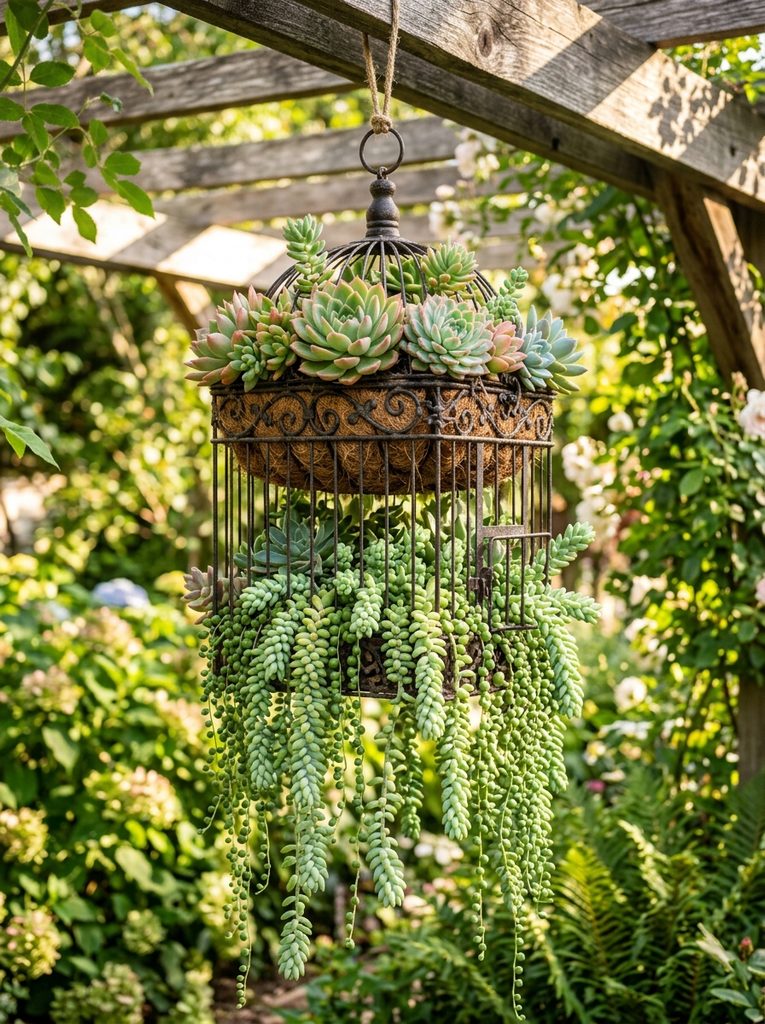
The cascading succulent planter in a suspended wire cage transforms an aerial garden space into a sculptural tapestry of drought-tolerant botanicals. The open wire bars of the cage allow trailing succulent varieties to weave through the exterior perimeter while upright rosettes form a dense, textured crown in the center. Fine-textured foliage such as string of pearls, burro’s tail, and trailing jade spill over the metal base, softening the rigid lines of the wireframe. This design is exceptionally beneficial for covered porches and sunny garden pergolas, where vertical air circulation prevents soil stagnation and protects sensitive succulents from root rot. The enclosed cage protects fleshy leaves from accidental garden damage while keeping the plants accessible for seasonal maintenance.
Begin by selecting an iron bird cage with a flat base and a hinged top dome. Cut a pre-formed coco coir liner to fit the bottom half of the cage, pressing it firmly against the lower wireframe to create a breathable soil basket. Fill the liner with a specialized cactus and succulent potting mix blended with perlite to ensure rapid drainage. Insert trailing succulent cuttings through the lower wire openings directly into the coir walls, securing them with floral pins. Plant upright echeveria and sedum varieties across the top soil surface until the base is densely packed. Close the cage dome, secure the safety latch, and suspend the planter from an overhead eyelet hook using an exterior-grade chain. Water lightly using a narrow-spout watering can to settle the soil.
Idea 2: Solar-Powered Fairy Light Lantern for Garden Pathways
How to Create
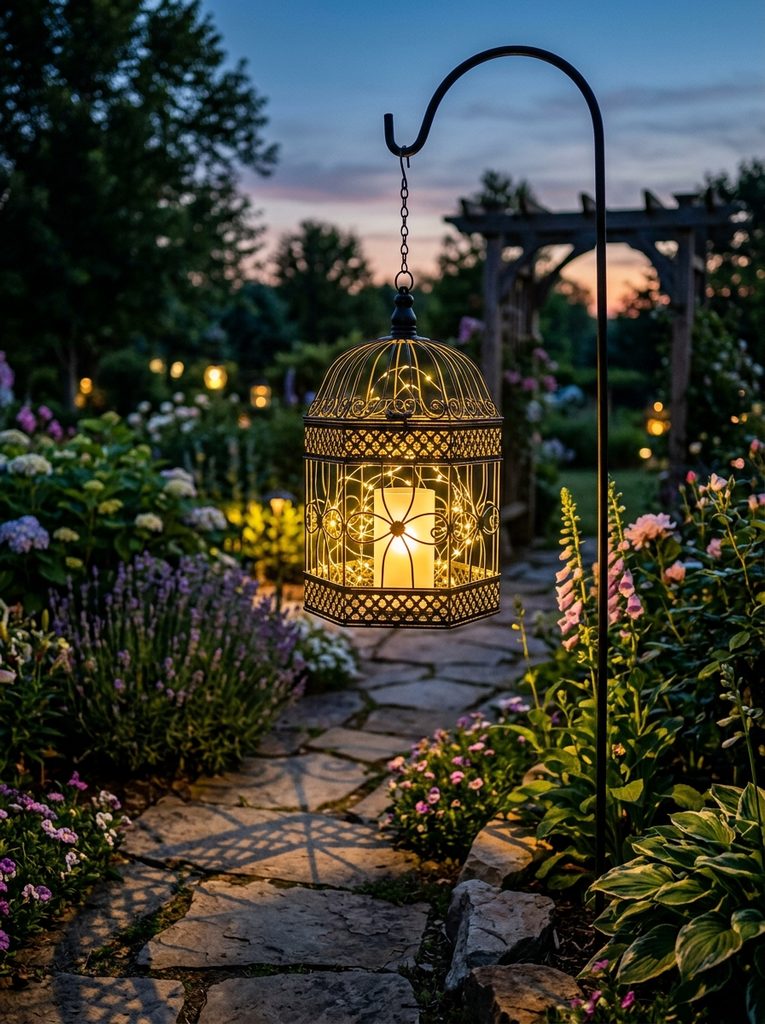
The solar-powered fairy light lantern turns an unused metal cage into an ambient outdoor illumination fixture that operates entirely off-grid. By housing a bundle of waterproof LED fairy lights within the wire structure, the cage projects intricate geometric shadows across surrounding stone pathways, garden walls, and flowerbeds at dusk. The top dome of the cage serves as a mounting platform for an external solar collection panel, ensuring consistent battery charging throughout daylight hours. This functional lighting solution eliminates the need for exterior electrical cords, making it an easy project to relocate along walkways, patio dining tables, or tree branches.
To construct this lighting fixture, thoroughly clean a lightweight decorative bird cage and coat the metal with a reflective metallic or matte black outdoor spray paint. Wrap a copper-wire strand of outdoor-rated, waterproof LED micro fairy lights around an artificial branch, dried grapevine orb, or large frosted glass hurricane vase placed in the center of the cage floor. Route the charging cord through the top roof bars, securing the mini solar panel to the exterior apex of the cage using clear zip ties or waterproof silicone adhesive. Position the cage on a decorative shepherd’s hook along a sunny garden border where the solar panel receives at least six hours of direct sunlight. The integrated light sensor automatically activates the glowing wire cage at sundown.
Idea 3: Natural Moss and Fern Terrarium for Shady Verandas
Execution Process
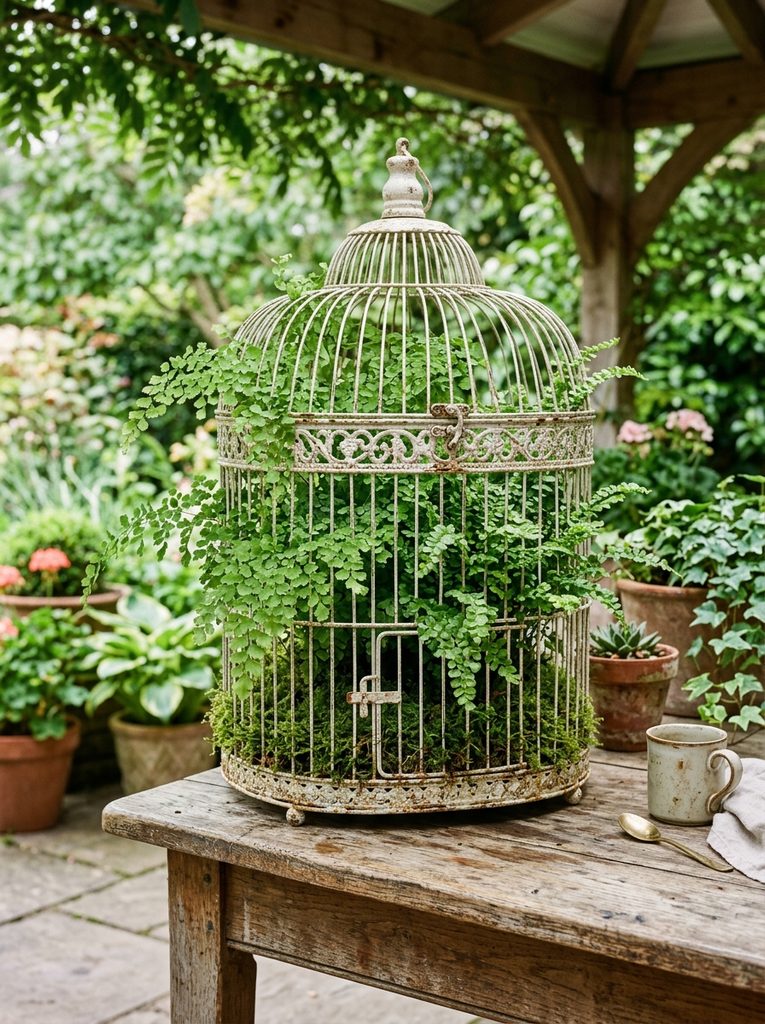
The natural moss and fern terrarium utilizes an open-air bird cage to house moisture-loving woodland foliage on shaded porches, covered verandas, or beneath dense tree canopies. Ferns, fittonias, and sheet moss create a lush botanical display that thrives in cool, filtered outdoor light without the risk of foliage scorch. The metal framework provides partial shelter from drying winds while preserving airflow, allowing delicate fronds to expand naturally between the bars. This living installation functions as an elegant tabletop centerpiece or floor ornament, adding deep emerald tones and an earthy forest ambiance to outdoor lounge spaces.
Prepare the base of an iron bird cage by lining the bottom tray with a heavy-duty plastic saucer to catch excess moisture. Layer fresh green sheet moss along the interior perimeter of the lower wireframe with the foliage facing outward, forming an organic, living wall. Fill the interior well with a rich, moisture-retaining potting mix enhanced with peat moss and worm castings. Plant compact fern species such as maidenhair, lemon button, and bird’s nest ferns in the center, surrounding their root balls with additional damp moss. Mist the foliage daily with a handheld garden sprayer to maintain ambient humidity around the fronds. Position the completed terrarium on a shaded outdoor plant stand away from direct midday sun exposure.
Idea 4: Flowering Trailing Vine Trellis in a Garden Flowerbed
Setup Method
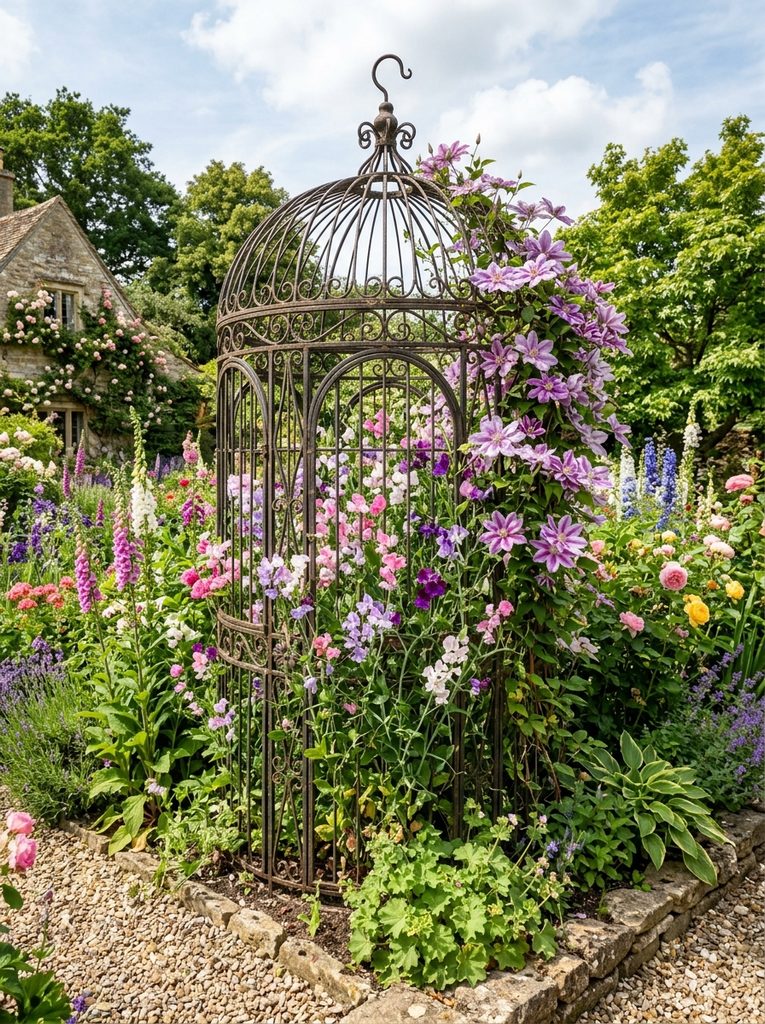
The flowering trailing vine trellis uses a tall, domed bird cage as a freestanding architectural support within in-ground landscape borders. Ground-dwelling flowering climbers such as black-eyed Susan vine, sweet peas, and clematis naturally wind their tendrils around the vertical iron bars, gradually covering the structure in seasonal blooms. As the vines mature, the cage becomes an eye-catching focal anchor that elevates ground-level flowerbeds. This application prevents delicate climbing varieties from sprawling untidily across the soil, improving air movement around stems to reduce fungal leaf issues while creating height in flat yard layouts.
Select a sturdy, open-bottom wrought iron bird cage with wide bar spacing. Prepare the surrounding garden soil by blending compost and slow-release organic fertilizer into a two-foot planting circle. Position the bird cage directly over the prepared soil, driving four long metal ground stakes through the lower frame deep into the earth to anchor the structure against high winds. Plant three to four young climbing vine starts around the exterior base of the cage, gently securing the initial main stems to the lowest bars with soft garden twine. As new shoots emerge, guide them upward and around the framework in a spiral direction. Keep the surrounding soil evenly moist and apply a high-phosphorus liquid bloom booster every two weeks to encourage flowers.
Idea 5: Elevated Songbird Feeding and Seed Dispensing Station
How to Make
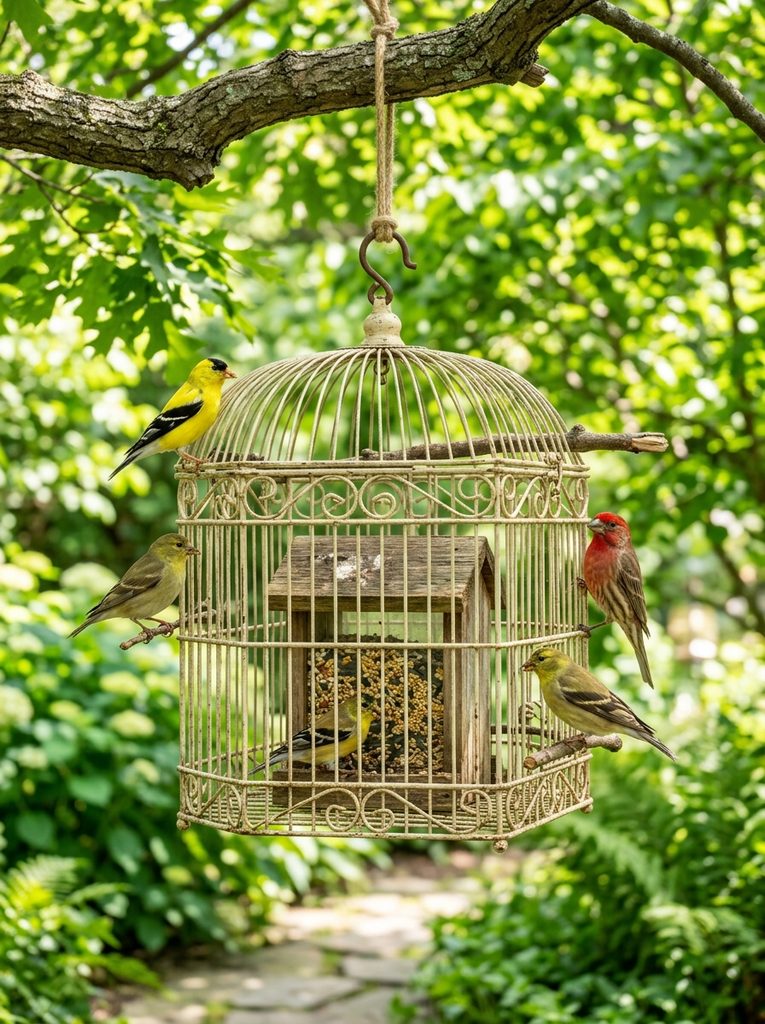
The elevated songbird feeding station transforms a classic bird cage into a functional wildlife shelter that protects birdseed from rain, large birds, and neighborhood pests. The outer bars of the cage act as a physical barrier, allowing smaller backyard songbirds such as finches, chickadees, and nuthatches to enter while keeping squirrels and crows from accessing the feeder inside. Placing a traditional tube feeder or a shallow seed tray in the center of the cage keeps the feeding area clean, dry, and sheltered from strong winds. This project enriches backyard biodiversity while adding a charming decorative element to your outdoor landscape.
Choose a vintage cage with bar spacing of one to one-and-a-half inches to allow small birds to pass through freely. Thoroughly scrub the cage using a non-toxic vinegar-and-water solution, ensuring all surfaces are free from chemical residue. Install an interior hanging hook from the center of the roof dome and suspend a wooden seed hopper or wire suet basket inside. Drill small drainage holes through the bottom metal tray to prevent water collection during heavy rainstorms. Add natural wooden perches across the interior bars using untreated birch branches fastened with wire. Hang the feeder station at least six feet off the ground from a sturdy tree limb or wall bracket, filling the reservoir with black oil sunflower seeds to attract local birds.
Idea 6: Rustic Wax and Pillar Candle Chandelier for Outdoor Dining
Step-by-Step Guide
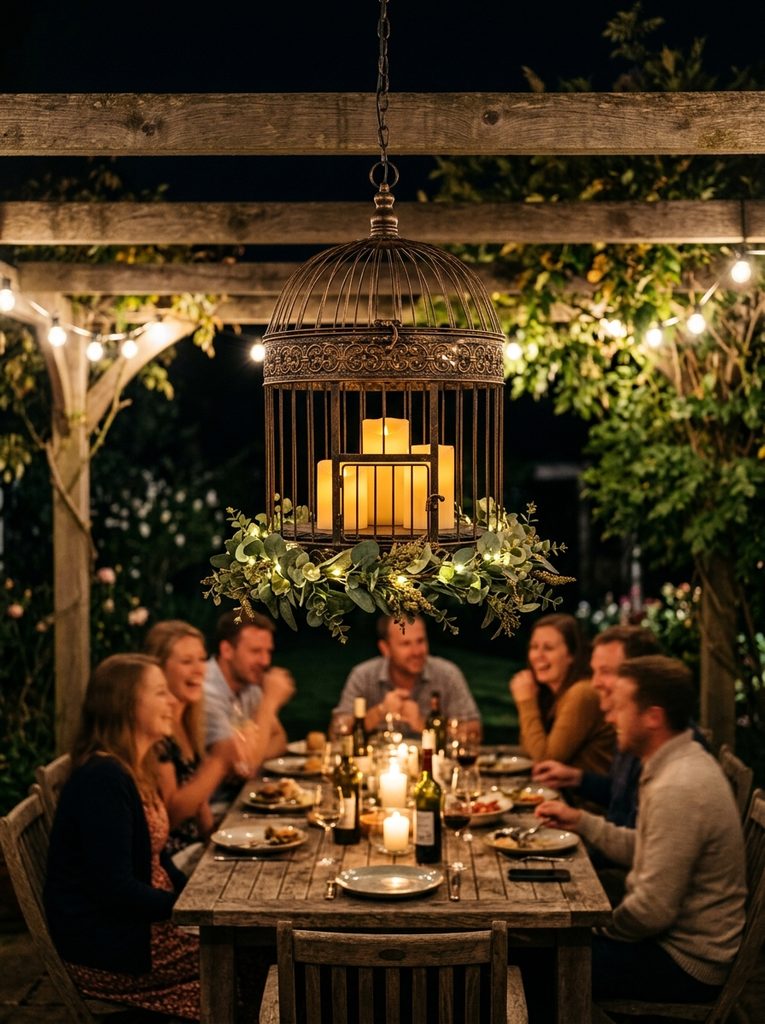
The rustic pillar candle chandelier repurposes an ornate bird cage into a functional overhead lighting feature for outdoor dining tables, covered gazebos, and pergolas. By arranging multiple pillar candles or safe, battery-operated flickering flame candles inside the cage, the fixture casts a warm, soft glow across evening gatherings. The enclosing wire bars protect live candle flames from light breezes, reducing smoke and uneven wax melting. When suspended directly above an outdoor dining area, this hanging centerpiece adds vintage ambiance, turning a simple meal into an intimate open-air gathering.
Select an ornate, domed wire bird cage with an easily accessible side door or a removable roof. Paint the cage exterior in a distressed chalk finish or deep bronze to match your patio furniture. Secure a heat-resistant metal plate or slate slab to the base tray to create a stable, level surface for candle placement. Arrange three varied-height, battery-operated LED pillar candles equipped with automatic dusk timers on the slate base, securing each candle bottom with adhesive mounting putty. Weave faux eucalyptus garlands or dried lavender stems around the exterior base of the cage for an organic accent, ensuring greenery stays clear of any live heat sources. Suspend the finished chandelier securely over the table using heavy-gauge ceiling hooks and braided jute cord.
Idea 7: Freestanding Tiered Herb Garden for Patios and Balconies
Execution Process
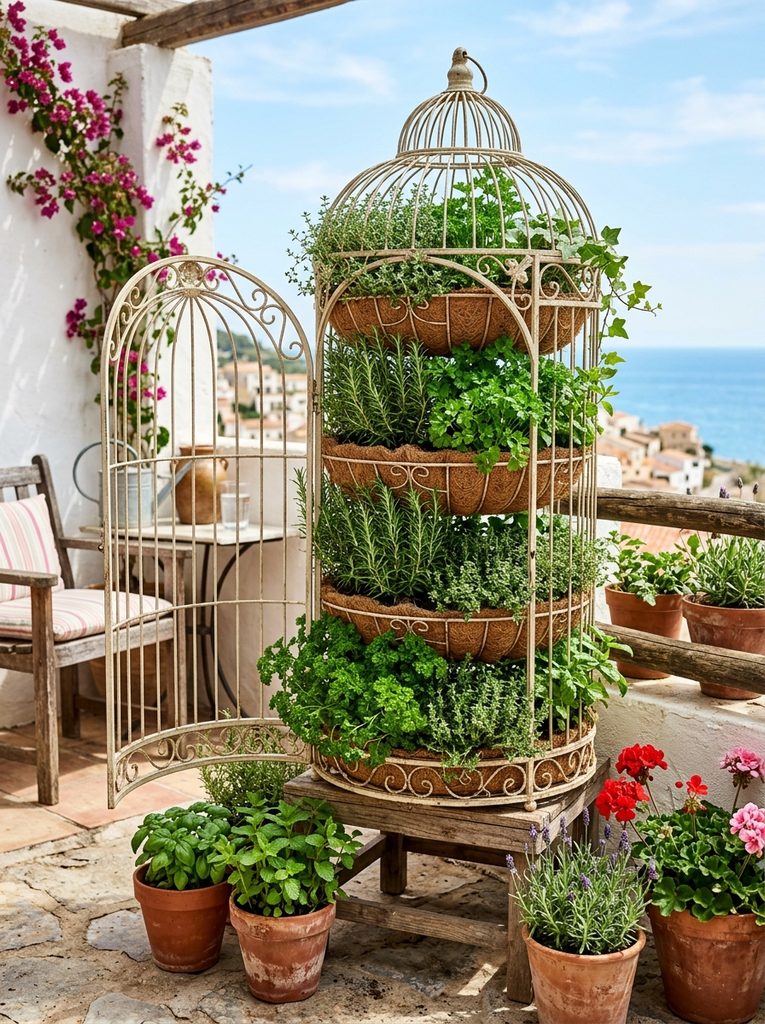
The freestanding tiered herb garden utilizes the vertical volume of a large bird cage to organize culinary herbs in compact patio, deck, or balcony settings. Grouping various edible herbs—such as rosemary, thyme, oregano, and chives—within a single vertical container saves floor space while keeping fresh cooking ingredients within arm’s reach of the outdoor kitchen. The cage structure allows ample sunlight to reach all levels of foliage while creating an elevated barrier that protects delicate plants from crawling pests and pets. This functional arrangement merges utility and decorative charm, making it a great addition to sunny small-space gardens.
Begin by selecting a wide, multi-door bird cage and placing it on a heavy-duty rolling plant caddy for easy sun repositioning. Line the bottom base and any internal wire perches with thick coco coir sheets, forming individual planting tiers. Fill each planting pocket with a lightweight, nutrient-rich potting soil blended with coarse sand to promote drainage. Plant taller herbs like upright rosemary and sage in the top crown tier, while placing creeping thyme, marjoram, and curly parsley in the lower tiers to spill over the wire edges. Water each tier thoroughly until moisture drains freely from the base. Place the herb tower in an open area receiving six to eight hours of direct sunlight, trimming the herbs regularly to promote bushy growth.
Idea 8: Coastal Sea Glass and Driftwood Display for Deck Decor
Setup Method
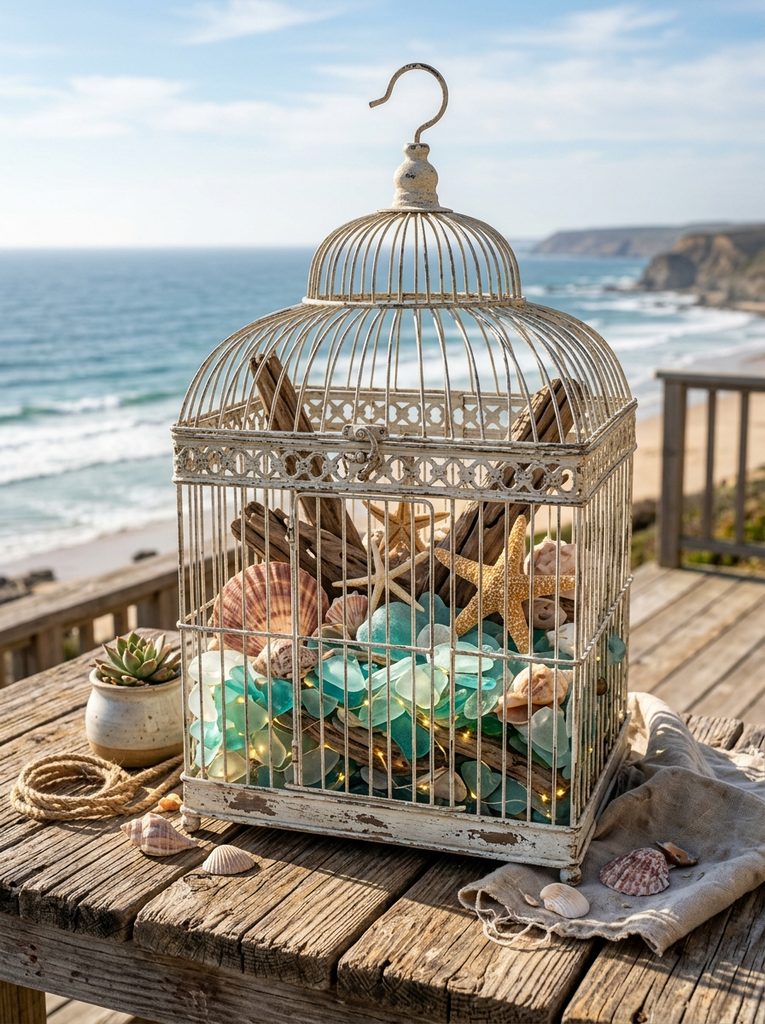
The coastal sea glass and driftwood display uses a weathered bird cage as an open-air shadowbox to showcase coastal treasures and maritime elements on pool decks and porches. Natural materials like weathered driftwood, polished sea glass, preserved starfish, and smooth beach pebbles create a coastal centerpiece that withstands sun and salt air. The open wire cage allows sea breezes to flow through freely without displacing lighter decorative pieces, while the natural materials patina over time in outdoor conditions. This display brings a breezy, relaxed coastal aesthetic to exterior living spaces without demanding regular plant care or electrical wiring.
Select a wooden-framed or white-painted wire bird cage and gently distress the exterior using coarse sandpaper to create an authentic weathered look. Line the base of the cage with clean, coarse beach sand or crushed oyster shells to a depth of two inches. Arrange architectural pieces of sun-bleached driftwood upright through the center of the cage, securing them between the wire bars. Intersperse natural starfish, large conch shells, and chunks of ocean-tumbled aqua sea glass around the driftwood base. Weave a strand of battery-operated, warm-white submersible micro lights beneath the glass chunks to create a subtle glow at night. Close the cage door and display the arrangement on an outdoor coffee table or deck side railing.
Idea 9: Seasonal Holiday Ornament and Foliage Lantern
How to Create
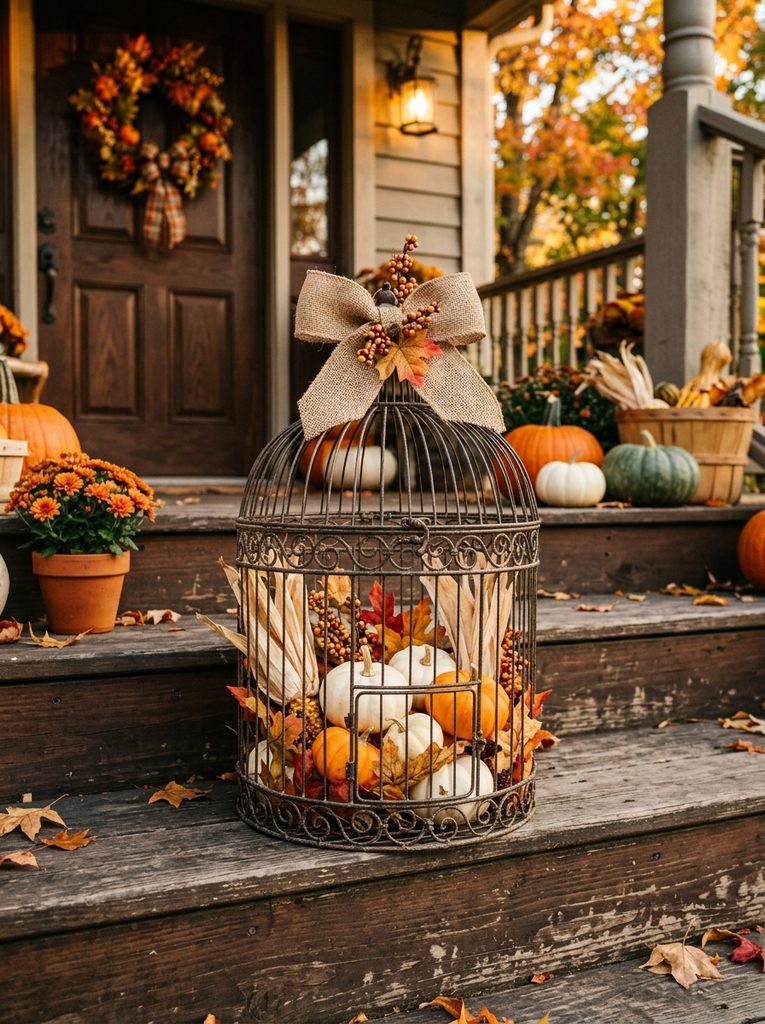
The seasonal holiday ornament and foliage lantern transforms a decorative bird cage into an adaptable exterior accent that transitions through autumn, winter, and spring holidays. By swapping out interior elements—such as miniature pumpkins in autumn, evergreen sprigs with shatterproof baubles in winter, and faux eggs with floral nests in spring—the cage remains an active focal point year-round. The enclosed wire frame keeps lightweight seasonal ornaments secure during windy weather while presenting a structured, decorative display beside entry doors and porch steps. This versatile project offers endless DIY creativity for homeowners who enjoy updating their outdoor decor with the seasons.
Choose a medium-sized, weather-resistant decorative cage with a wide front-opening door. For an autumn display, fill the interior base with faux burlap ribbon, dried corn husks, and a cluster of miniature painted heirloom pumpkins, finishing with a large plaid ribbon tied to the top loop. For a winter transition, replace the pumpkins with fresh cedar clippings, pinecones, and weather-resistant shatterproof metallic baubles, weaving battery-operated string lights through the foliage. For spring, arrange a base of Spanish moss with pastel faux eggs and silk cherry blossom branches. Position the decorated cage on your front porch stairs or flanking the entryway door, switching out interior materials as each season approaches.
Idea 10: Backyard Pollinator Hydration and Butterfly Resting Station
Execution Process
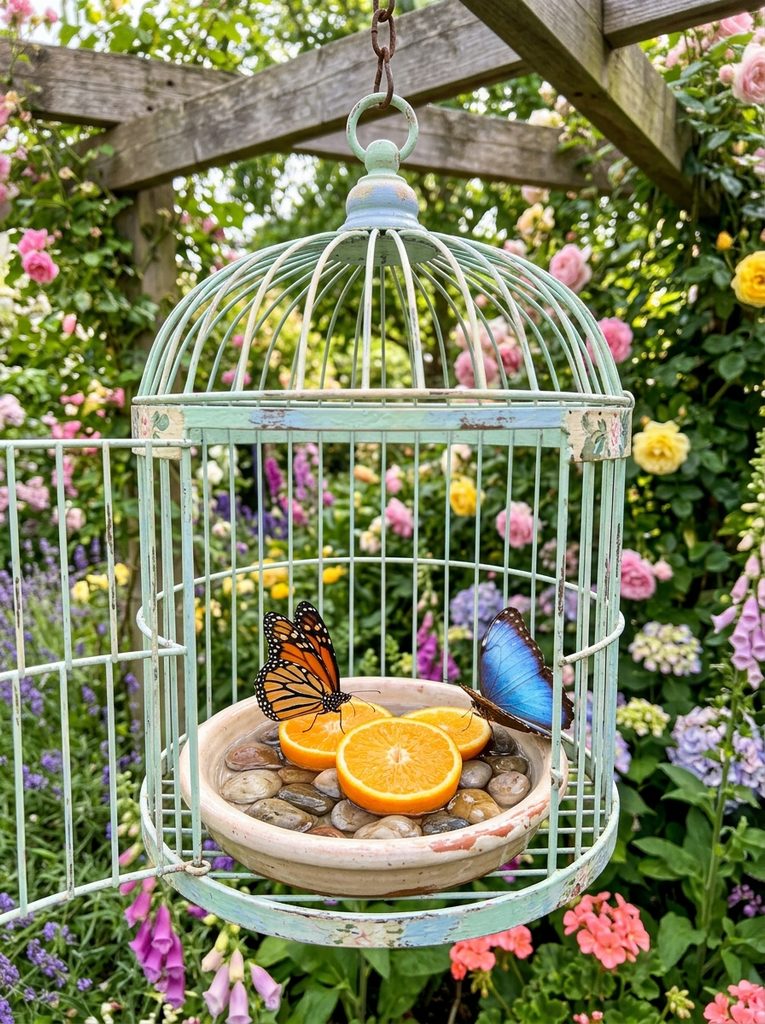
The backyard pollinator hydration and butterfly resting station turns a hanging bird cage into a functional oasis that supports beneficial insects, honeybees, and butterflies. Pollinators require shallow water sources to drink and regulate temperature without the danger of drowning in deep birdbaths. By suspending shallow glass dishes filled with river stones, water, and nectar sources inside a sheltered cage, insects can hydrate safely away from predatory garden birds. The wire bars provide perching spots for butterflies to rest their wings, while bright floral plantings around the exterior attract pollinators to your garden. This project helps sustain local ecosystems while adding vibrant natural life to your backyard.
Select an open-wire bird cage with a flat base and wide bar spacing, coating the exterior in a bright, flower-mimicking yellow, purple, or coral paint. Secure a shallow, wide ceramic plant saucer to the bottom floor using waterproof outdoor adhesive. Fill the saucer with smooth, clean river pebbles, glass marbles, and small sea stones, arranging them so their tops remain slightly above the water line to create dry landing perches. Pour fresh, clean water over the stones, keeping the water level just below the rock surfaces, and place slices of overripe oranges or bananas on the rocks to provide natural carbohydrates for butterflies. Suspend the station from a garden archway near flowering perennials, replenishing the water supply every two days to maintain freshness.
Common Beginner Mistakes and How to Avoid Them
A frequent mistake when creating outdoor bird cage decor is neglecting adequate weatherproofing on unsealed metal structures before outdoor installation. Indoor decorative cages are typically manufactured with water-soluble coatings that rust, flake, and deteriorate when exposed to rain, humidity, and direct sunlight. To prevent this rapid degradation, always clean vintage metal with a wire brush and apply two coats of rust-inhibiting exterior spray primer, followed by a durable UV-resistant topcoat. Another widespread error is failing to incorporate proper soil drainage within bird cage planters. Planting directly into unlined, solid metal bottom pans traps standing water around root zones, causing rapid root rot in succulents, herbs, and flowering annuals. Prevent water accumulation by drilling half-inch drainage holes through the base tray or using porous coco coir liners that let excess water drain away freely. Additionally, using lightweight hanging hardware or thin wire to suspend heavy, soil-filled planters presents a safety hazard in high winds. Always use outdoor-rated galvanized chains, stainless steel S-hooks, and heavy-duty wall anchors rated for at least double the total weight of the fully watered planter.
Practical Tips for Better Results
Achieving professional, durable results with outdoor bird cage displays relies on choosing the right materials, seasonal maintenance, and smart plant selection. When assembling living planters, always blend coarse perlite, horticultural charcoal, or pumice into your potting mix to keep soil aerated, light, and free-draining within the coir liners. If you are incorporating outdoor lighting, select solar panels featuring high-efficiency monocrystalline cells paired with weather-sealed battery housings, placing the sensor where it receives uninterrupted direct sunlight. For hanging displays, apply a small drop of marine-grade grease to metal swivel hooks to eliminate squeaking and reduce friction wear during windy conditions. Regularly trim fast-growing trailing plants like ivy and sedum to prevent their stems from becoming tangled around the cage door latch, ensuring easy access for soil care and seasonal replanting. To clean glass hurricanes, solar panels, and metal bars without damaging nearby plants, wipe down surfaces monthly using a mild mixture of warm water and plant-safe castile soap applied with a microfiber cloth.
Styling, Presentation, or Organization Ideas
Arranging your outdoor bird cage decorations into a cohesive design improves the visual flow and ambiance of your patio, garden, or porch. Group bird cages in odd-numbered clusters of three at varying heights—placing one large cage on a rustic wooden bench, a medium cage on a decorative plant stand, and suspending a smaller cage from an overhead beam to create a tiered visual display. When styling outdoor dining tables, keep bird cage centerpieces under twelve inches in height to maintain clear sightlines between seated guests across the table. Coordinate the color finish of your cages with existing exterior architectural hardware, matching matte black iron fixtures, brushed bronze garden gates, or weathered white window trims. Use woven textures like jute rugs, rattan patio chairs, and terra cotta pottery nearby to complement the wire lines of the cages. Maintaining a unified aesthetic theme across your plantings—such as using exclusively cool-toned silvers and purples or warm sunset yellows and terracottas—creates a curated garden space that feels cohesive and intentional.
Budget or Time Planning
Creating custom outdoor bird cage decor is an economical and time-efficient DIY project that can easily be completed in a few hours over a single weekend. Sourcing secondhand cages from thrift stores, estate sales, garage sales, or online community marketplaces often costs between five and twenty dollars, saving money compared to buying expensive new garden store planters. Budget approximately ten to fifteen dollars for exterior-grade rust-inhibiting spray paint and clear protective sealers, which provide enough coverage for multiple small garden projects. Purchasing multi-packs of coco coir liners, potting soil, and beginner friendly succulent cuttings or seed packets keeps total botanical expenses under twenty dollars per installation. The preparation, painting, and drying phases typically require one to two hours of active work, followed by twenty minutes of potting, wiring, and hanging. Investing in quality, reusable hardware upfront minimizes future repair expenses, making upcycled bird cage decor a sustainable, cost-effective way to beautify your outdoor space for multiple seasons.
Creative Expansion and Advanced Inspiration
Once you have mastered basic outdoor bird cage projects, you can explore advanced modifications and custom fabrication techniques to elevate your garden design. Consider integrating micro-irrigation systems by threading thin quarter-inch drip-line tubing through the rear bars of hanging cages, connecting them to an automated hose timer for hands-free, efficient watering. You can also explore custom artistic patinas by applying copper sulfate solutions or specialized verdigris chemical oxidizers to raw brass and copper cages, creating authentic aged-green mineral finishes. For larger bird cages, install interior wooden platforms to construct a multi-level fairy garden complete with miniature stone stairs, dwarf bonsai trees, and tiny LED-lit cottages. Advanced decorators can also mount decorative cages flush against exterior brick walls using masonry anchors, cutting the cages in half lengthwise to create architectural wall sconce planters. These creative design variations allow you to customize each project, keeping your outdoor spaces dynamic, unique, and artistically engaging throughout the year.