Repurposing vintage and modern bird cages into decorative indoor centerpieces offers a sophisticated way to integrate architectural texture, natural greenery, and ambient illumination into residential living spaces. Decorative cages feature intricate wirework, domed silhouettes, and classical latching doors that make them versatile vessels for showcasing botanical arrangements, heirloom collectibles, and seasonal displays. In this comprehensive interior design tutorial, you will explore ten creative ideas for transforming decorative cages into functional home decor accents for entryways, mantels, dining tables, and reading nooks. You will learn practical methods for securing live houseplant pots, stabilizing delicate LED lighting systems, arranging preserved florals, and balancing structural weights within suspended or tabletop installations. Exploring these curated Pinterest ideas provides actionable guidance for selecting appropriate cage dimensions, choosing complementary color palettes, and executing lasting displays without damaging delicate architectural metalwork. Understanding how varied internal materials interact with ambient room lighting allows you to craft balanced focal points that suit both rustic farmhouse aesthetics and sleek minimalist style environments. This structured guide delivers step by step instructions to prepare you for designing enduring interior accents that enhance your indoor living areas.
Why Bird Cage Accents Lead Modern Interior Trends
Decorative bird cages continue to dominate modern interior design inspiration because they resolve the challenge of adding three-dimensional vertical structure to flat surfaces with minimal footprint. Contemporary home staging prioritizes modular, adaptable accents that bring organic forms and vintage character into modern design concepts. The open wire architecture of a decorative cage provides structural containment while maintaining complete visual transparency, allowing natural light to filter freely through the display without creating visual clutter. These trending ideas offer significant value for homeowners seeking a beginner friendly DIY project that yields high aesthetic impact on a manageable budget. Repurposing antique iron, weathered wood, or powder-coated metal cages fulfills the growing demand for sustainable, upcycled home decor that celebrates artisanal craftsmanship. Furthermore, indoor bird cage arrangements offer complete seasonal adaptability, allowing decorators to transition interior vignettes seamlessly from fresh spring botanicals to warm winter holiday themes by simply swapping internal components. By pairing architectural charm with effortless personalization, indoor bird cage displays remain an enduring cornerstone of creative home styling.
Essential Materials and Initial Project Planning
Executing a successful bird cage decorative project requires systematic preparation, proper tool selection, and careful surface assessment before styling begins. The primary materials required include an ornamental bird cage crafted from wrought iron, wire, or wood, wire cutters, clear zip ties, floral foam blocks, florist wire, micro LED fairy lights with hidden battery compartments, and moisture-resistant protective trays. Preparation begins with an intentional cleaning and restoration phase; inspect vintage cages for rust or flaking paint, gently sanding abrasive spots and coating raw metal with a clear matte sealant to protect furniture surfaces. If you are incorporating live houseplants or damp floral foam, measure the interior cage base precisely to fit a clear acrylic or ceramic saucer beneath the arrangement to prevent water leaks. Planning the spatial placement of your cage relative to surrounding furnishings ensures that suspended models are anchored into solid ceiling joists while tabletop pieces do not obstruct sightlines across dining or coffee tables. This thorough groundwork ensures your creative project remains structurally stable, clean, and visually cohesive.
1. Cascading Pothos and Botanical Terrarium Cage
How to Create
The cascading pothos and botanical terrarium cage concept transforms a domed wire cage into a lush, living sculpture that introduces vibrant indoor greenery to tables or plant stands. This design utilizes trailing foliage, such as golden pothos, English ivy, or heartleaf philodendron, housed within a stable internal pot. The natural growth habit of vining houseplants allows the tendrils to weave organically through the wire bars, softening the rigid metal structure with fluid green lines. This living terrarium aesthetic works exceptionally well in sunlit living rooms, sunrooms, and home offices, establishing an inviting biophilic focal point that cleanses indoor air while showcasing classical garden charm within an enclosed architectural frame.

To construct this living botanical display, begin by selecting a healthy, potted trailing plant in a four-inch or six-inch nursery container that fits comfortably through the cage door. Place a clear plastic drainage saucer at the bottom of the bird cage to protect the base metal and furniture from moisture overflow during routine watering. Position the potted plant securely in the center of the saucer, camouflaging the container by packing natural preserved sheet moss around the perimeter of the pot. Gently guide several mature vines through the vertical wire bars, weaving them upward and outward along the cage exterior while securing delicate stems with soft plant ties. Place the finished cage near bright, indirect window light, opening the top dome or door weekly for routine moisture checks.

2. Pillar Candle and Fairy Light Lantern Display
Step-by-Step Guide
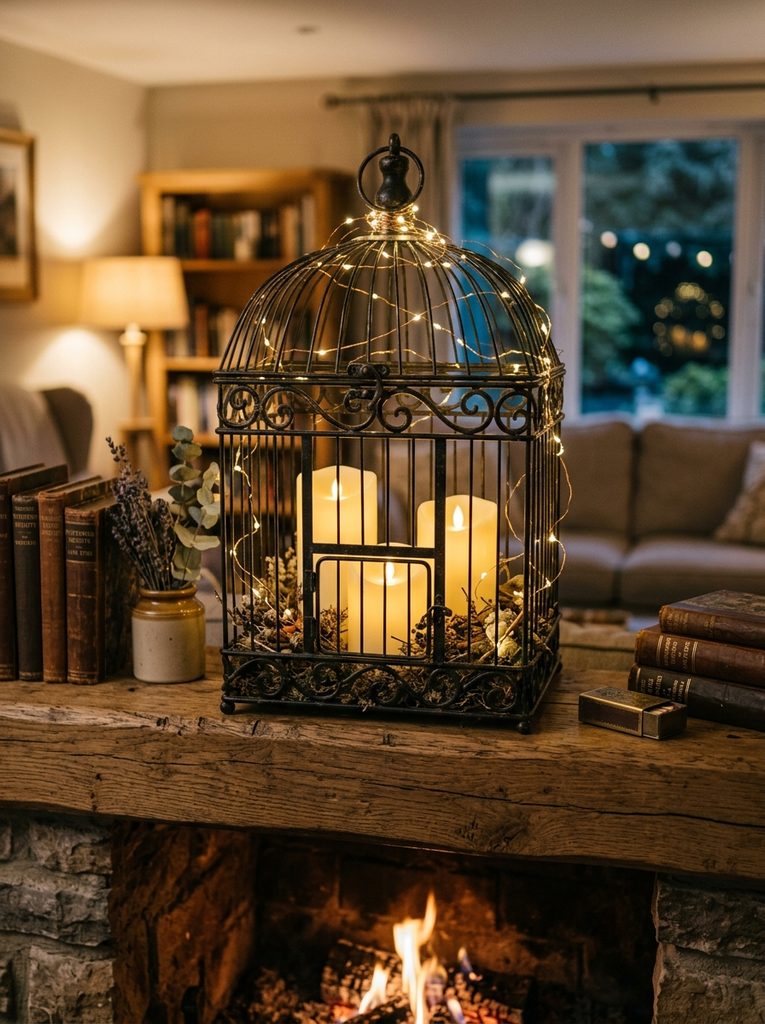
The pillar candle and fairy light lantern display combines warm ambient illumination with structured wirework to create a safe, glowing centerpiece for evening entertaining. This concept features battery-operated, flameless LED pillar candles of varying heights nestled inside the cage, surrounded by a delicate web of warm-white micro fairy lights. The open metal framework casts intricate, geometric shadows across nearby walls, adding depth and warmth to dining rooms, fireplace mantels, or bedroom dressers. Utilizing flameless electronic illumination guarantees complete fire safety within enclosed metal or wooden structures while offering convenient remote-control or timer-based daily operation.
To assemble this luminous lighting display, start with three flameless LED wax pillar candles measuring four, six, and eight inches in height. Arrange the three candles in a triangular cluster at the center of the cage base, securing their bottom edges with small pieces of museum putty to prevent shifting. Weave a ten-foot strand of warm-white copper fairy lights loosely around the base of the candles, winding the wire upward through the interior cage bars toward the domed ceiling. Conceal the battery pack beneath the cage base or disguise it under a layer of preserved Spanish moss placed around the candle perimeter. Program the candle timers to activate automatically during evening hours for effortless, reliable illumination.
3. Vintage Hardcover Book Nook and Literary Stand
Execution Process
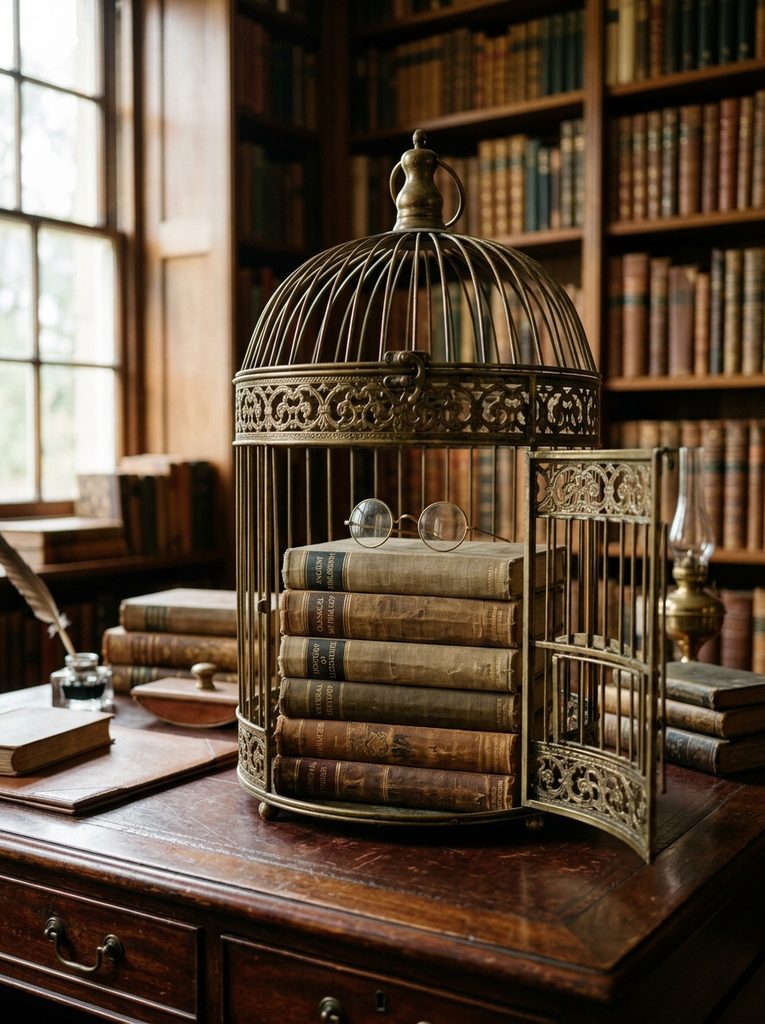
The vintage hardcover book nook and literary stand turns an antique or open-sided bird cage into an artistic, intellectual accent piece for libraries, bedside tables, and home studies. This arrangement features a curated stack of cloth-bound antique books, vintage brass reading glasses, and rolled parchment scrolls arranged thoughtfully inside the cage interior. The structural metal cage protects and frames the aged paper textures, producing a nostalgic, scholarly aesthetic that celebrates classic literature and historic design. This styling method provides an exceptional way to display meaningful family heirlooms, leather journals, or rare flea market finds within a secure, dedicated enclosure.
Begin by gathering five to seven vintage hardcover books with coordinated cloth bindings in muted neutral tones like linen, navy, deep olive, or burgundy. Stack the books horizontally inside the cage, placing the largest, heaviest volume at the bottom and tapering up to the smallest book at the top of the stack. Open the top book to an illustrated plate or place a pair of antique round brass spectacles across its closed cover to establish an inviting, lived-in feel. Drape a string of wooden beads or a brass pocket watch casually over the side of the book stack, letting it trail slightly past the open cage door. Secure the door in a semi-open position using a short loop of florist wire to complete the display.
4. Preserved Floral Chandelier and Dried Botanicals
How to Make
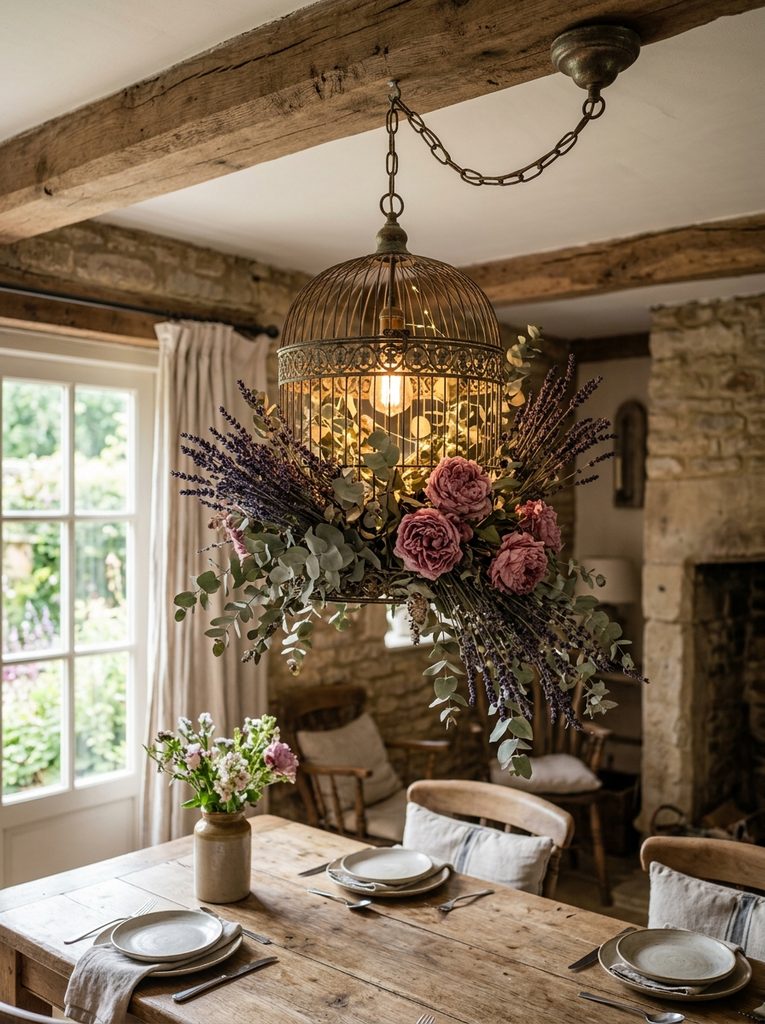
The preserved floral chandelier and dried botanicals installation converts a hanging bird cage into an overhead floral centerpiece featuring dried lavender, eucalyptus, baby’s breath, and preserved roses. This design suspends the cage from ceiling fixtures or wall brackets, allowing colorful dried floral stems to erupt through the dome and spill downward beneath the base. The long-lasting nature of preserved florals eliminates the need for water, providing a permanent, fragrance-rich installation that adds rustic charm to dining areas, covered verandas, or entryway foyers. The delicate textures of dried petals contrast against dark iron bars, offering an artistic, handmade touch.

To assemble this hanging floral chandelier, insert a dense block of dry floral foam into the center of the bird cage, securing it to the floor bars with cross-wrapped zip ties. Trim stems of dried eucalyptus, statice, and bleached ruscus to four-inch lengths, inserting them firmly into the top and sides of the foam block until the base is completely obscured. Thread longer stems of dried baby’s breath and preserved lavender through the lower cage bars, allowing the delicate sprigs to dangle naturally beneath the base. Insert focal blooms, such as dried dusty-rose peonies or strawflowers, into the front-facing section for visual balance. Suspend the finished cage using a sturdy ceiling hook and decorative metal chain.
5. Succulent Garden and River Rock Sanctuary
Setup Method
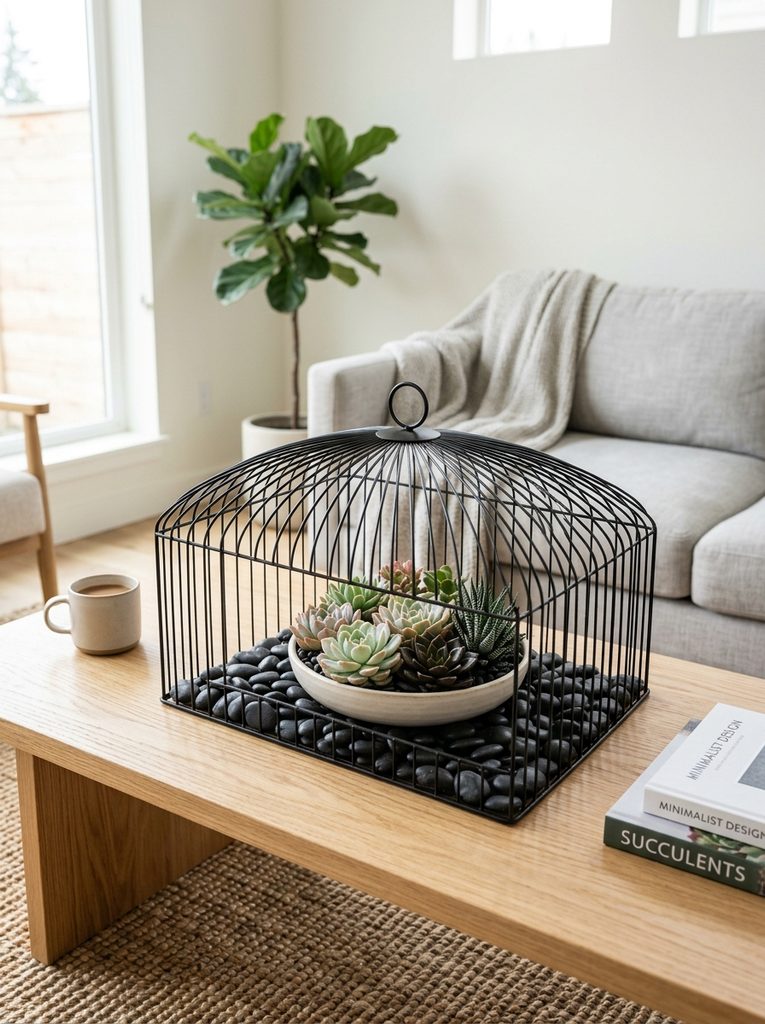
The succulent garden and river rock sanctuary idea establishes a low-profile, drought-tolerant desert landscape inside a wide, shallow bird cage. This concept incorporates an assortment of miniature echeveria, haworthia, and jade succulents planted within a shallow terracotta dish concealed by smooth river stones and pea gravel. The open ventilation provided by bird cage bars creates an ideal microclimate for succulents, preventing moisture buildup that often damages desert plants in traditional glass terrariums. This clean, modern design suits coffee tables and office desks, offering a minimalist aesthetic that requires minimal maintenance throughout the year.
Begin by choosing a shallow, heavy ceramic or terracotta planting dish that fits cleanly onto the floor of the bird cage. Fill the bottom half of the dish with a fast-draining cactus and succulent potting mix, leaving room for planting. Arrange five to seven small succulent varieties of contrasting shapes, textures, and heights in the soil, pressing the root balls firmly into place. Cover the exposed topsoil completely with a half-inch layer of washed river pebbles or polished black aquarium stones to lock the soil in place and provide a clean finish. Carefully slide the planted dish into the bird cage, latching the door securely before placing the display in a spot receiving at least six hours of direct sunlight daily.
6. Seasonal Holiday Ornament and Bauble Showcase
Step-by-Step Guide
The seasonal holiday ornament and bauble showcase transforms a decorative cage into a sparkling festive accent tailored for winter celebrations. This concept fills the entire volume of the cage with shatterproof metallic ornaments, frosted pinecones, and battery-operated twinkle lights. The reflective surfaces of gold, silver, and champagne glass baubles catch incoming light from every angle, creating a luminous focal point for holiday mantels, buffet tables, and entryway consoles. This project offers an organized, modern alternative to traditional holiday tabletop arrangements, containing delicate decorations neatly within a single architectural silhouette.
To construct this holiday display, line the bottom tray of a medium or large metal bird cage with a small circle of white faux fur or velvet fabric to protect ornaments from metal scratches. Begin placing larger shatterproof ornaments and frosted pinecones at the bottom of the cage, distributing weight evenly across the base. Layer medium and small metallic baubles over the lower tier, weaving a thin strand of battery-operated micro fairy lights through the ornaments as you build upward toward the dome. Fill the top dome with miniature shiny baubles until the cage appears generously filled without bulging against the wire bars. Fasten the door securely and tie an oversized satin or velvet ribbon bow to the top hanging ring.

7. Elegant Indoor Herbarium and Tea Station Caddy
Execution Process
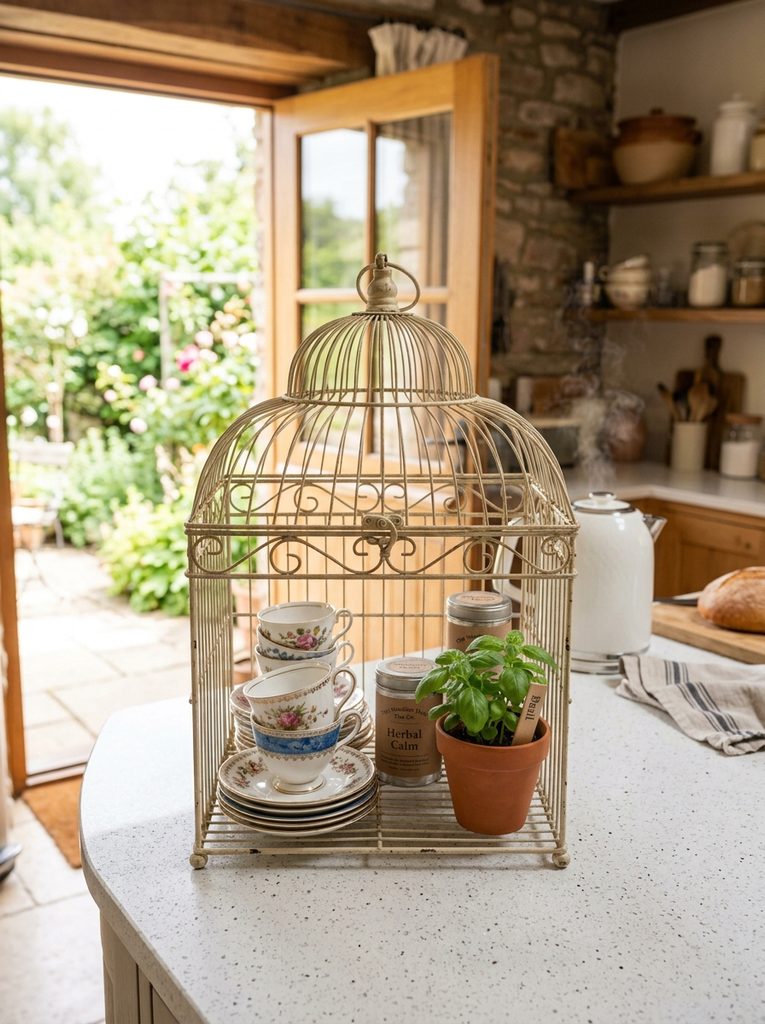
The elegant indoor herbarium and tea station caddy repurposes a tiered or wide-door bird cage into a functional storage caddy for artisanal tea tins, vintage teacups, and potted culinary herbs. This concept balances decorative elegance with daily kitchen utility, keeping beverage essentials organized in an aesthetic, accessible manner on kitchen countertops or coffee carts. The vertical height of the bird cage maximizes usable vertical space, providing dedicated compartments for ceramic mugs, honey jars, and small planters of fresh mint or rosemary without cluttering kitchen prep areas.
To create this functional tea station, place a flat, circular wooden cutting board or polished slate slab at the base of the cage to provide a level, solid resting surface. Arrange two vintage porcelain teacups and saucers on one side of the platform, tucking a small brass honey dipper and small tea strainer into one cup. Position two decorative airtight tea canisters along the back wall of the cage. Place a small, potted culinary herb, such as sweet basil or lemon thyme, in a miniature ceramic pot next to the canisters to introduce fresh aromas and botanical color. Keep the cage door tied open with a neutral linen cord for easy daily access to tea supplies.
8. Suspended Air Plant and Driftwood Habitat
How to Create
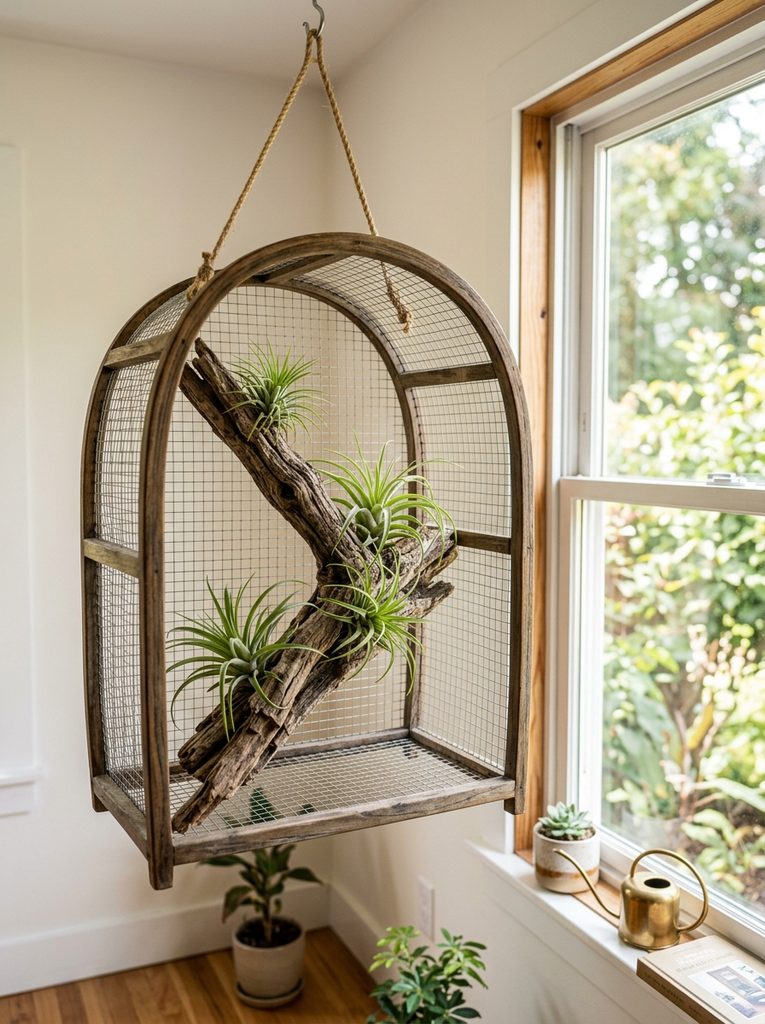
The suspended air plant and driftwood habitat creates an airy, sculptural installation that showcases epiphytic tillandsia plants mounted on natural driftwood inside a hanging cage. Because air plants require no soil to thrive, they can be suspended freely from the cage wires using invisible monofilament line or affixed to organic wood branches with waterproof botanical glue. This lightweight, soil-free configuration allows maximum light penetration, making it ideal for hanging in front of sunny windows, over reading chairs, or along narrow hallway corridors where traditional bulky planters cannot fit.
To assemble this air plant habitat, select an interesting piece of weathered manzanita or grapevine driftwood that fits diagonally across the interior of the bird cage. Secure the wood inside the cage by anchoring both ends to the wire bars using clear zip ties, trimming the excess plastic ends flush. Apply a small dot of non-toxic, waterproof floral glue to the base of three to five healthy tillandsia air plants, pressing them firmly onto the natural crevices of the driftwood branch. Hang the cage from an indoor ceiling hook near filtered daylight. Maintain the display by misting the air plants thoroughly twice weekly with a fine water spray, ensuring adequate airflow through the cage bars.
9. Sculptural Mineral and Geode Exhibition Cage
Setup Method
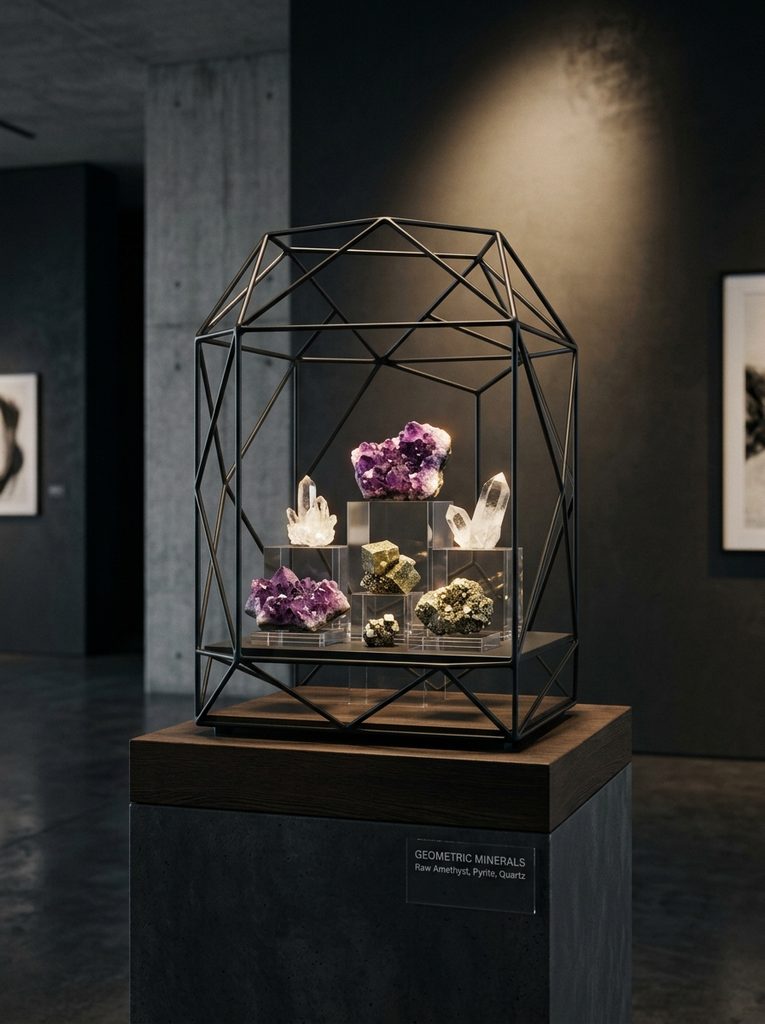
The sculptural mineral and geode exhibition cage turns natural geological specimens into a high-end, gallery-style home decor exhibit. This design showcases raw amethyst clusters, polished agate slices, quartz crystals, and pyrite stones resting on tiered acrylic display stands inside a sleek black or metallic bird cage. The contrast between rough geological textures, crystalline facets, and structured iron wirework creates a sophisticated, modern aesthetic that fits effortlessly into contemporary, industrial, or mid-century modern living spaces. This display method keeps precious stone collections organized, elevated, and dust-free within a dedicated showcase.
Begin by selecting an assortment of five to seven mineral specimens featuring diverse colors, geometric shapes, and natural crystalline formations. Place clear acrylic riser blocks of varying heights on the bottom floor of the bird cage to create distinct visual levels. Position the largest, most dramatic specimen, such as an open amethyst geode cavity or large selenite tower, on the highest central riser. Arrange smaller polished agate slices, raw pyrite cubes, and clear quartz points across the lower risers and base floor. Direct a small, battery-operated LED spotlight or clip-on reading light through the top dome of the cage to illuminate the mineral facets and accentuate their natural crystalline shimmer.
10. Faux Butterfly and Moss Woodland Diorama
How to Make
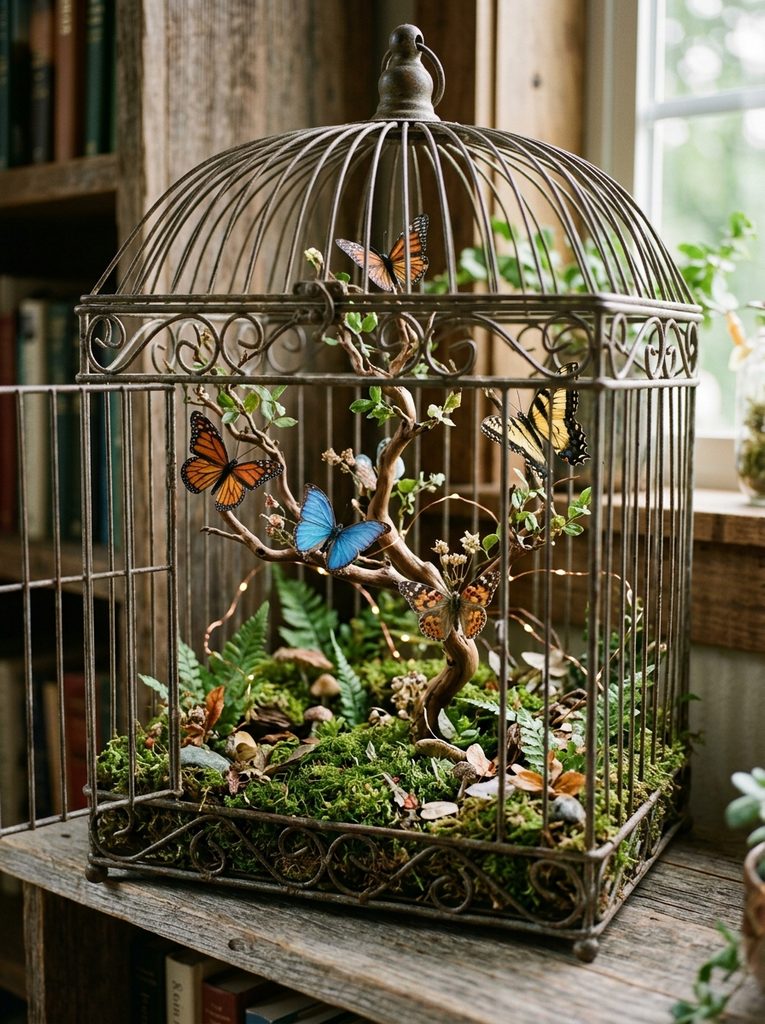
The faux butterfly and moss woodland diorama captures the whimsical charm of an enchanted forest inside a decorative wire cage, making it an imaginative accent for children’s bedrooms, nurseries, or creative workspaces. This concept incorporates preserved forest mosses, miniature dried branch structures, and realistic feather butterflies poised as if taking flight inside the enclosure. The combination of rich botanical greens, organic wood bark, and colorful faux winged insects provides a playful yet sophisticated focal point that brings the wonder of outdoor nature indoors without requiring maintenance.
To construct this woodland diorama, cover the entire base floor of the bird cage with a thick layer of preserved green sheet moss and clump reindeer moss, securing it with non-toxic craft glue. Insert a dry, multi-branched manzanita twig vertically into the center, anchoring its base with a hidden ball of floral clay beneath the moss layer. Attach six to eight realistic feather or silk butterflies to the branch twigs and interior cage bars using thin florist wire, angling their wings outward to simulate active movement. Weave a delicate strand of battery-operated micro fairy lights through the base moss to produce a soft woodland glow. Latch the cage door and place the diorama on a shelf or side table.
Common Beginner Mistakes and How to Avoid Them
Creating indoor bird cage displays requires attention to structural balance, moisture protection, and scale to prevent common decorating mistakes that compromise both the accent and surrounding furnishings. A frequent error is placing live potted plants directly onto unlined metal bases, which causes water to leak onto wooden tabletops and accelerates rust along the cage floor. Always install a waterproof ceramic saucer or clear plastic tray beneath every living plant to catch drainage water completely. Another common mistake is overfilling the cage with too many competing elements, which creates visual clutter and obscures the architectural beauty of the wire bars. Maintain at least thirty percent negative space within the cage interior so light can filter freely through the structure. Additionally, avoid using real flame candles inside decorative bird cages; rising heat and soot can discolor the top dome, crack delicate metal welds, and present a serious fire hazard. Rely exclusively on high-quality flameless LED candles with integrated automatic timers for safe, clean illumination.
+------------------------------------+---------------------------------------+
| Common Bird Cage Decor Mistake     | Practical Prevention Strategy         |
+------------------------------------+---------------------------------------+
| Unlined bases leaking water        | Install a waterproof plastic saucer   |
| Overcrowding the interior volume   | Preserve 30% negative space inside    |
| Using real burning flame candles   | Use flameless battery-operated LEDs   |
| Hanging heavy cages on drywall     | Anchor mounting hooks into wood studs |
+------------------------------------+---------------------------------------+
Practical Tips for Longevity and Better Results
Achieving professional, polished styling results at home relies on consistent maintenance habits and proper handling techniques that protect your decorative bird cage investments. When working with vintage wire cages, apply a light coat of automotive paste wax or clear acrylic matte spray to the metal frame every six months to prevent oxidation and maintain a smooth, dust-resistant finish. When installing battery-operated fairy lights or flameless candles, route the connection wires along the back structural ribs of the cage, securing them with miniature zip ties trimmed close to the frame to keep mechanical components invisible from the front. For living botanical displays, rotate the entire cage ninety degrees weekly to ensure all sides of your houseplants receive equal amounts of natural sunlight, preventing uneven leggy growth. Clean accumulated dust from delicate wire bars and artificial greenery using a soft microfiber duster or a hair dryer set to the cool, low-speed setting to keep your arrangements looking fresh and vibrant.
Styling, Presentation, and Room Placement Ideas
The inherent versatility of decorative bird cages allows for diverse room placement strategies that enhance various interior design aesthetics and architectural zones. In an entryway foyer, position a large, footed bird cage filled with glowing pillar candles on a rustic console table to create an inviting, warm greeting for visiting guests. In a living room, balance a tall vertical bookshelf by placing a cascading pothos bird cage on the top shelf, letting the green vines spill gracefully downward across book spines. For formal dining room tables, arrange a trio of miniature bird cages containing white preserved florals and fairy lights along a neutral linen table runner to create a cohesive, low-profile tablescape that allows clear conversation across the table. Suspended bird cages work exceptionally well in neglected room corners, where hanging a pair of cages at staggered heights draws the eye upward, softening sharp architectural corners and adding vertical depth to smaller rooms.
Budget Planning and Upcycling Strategies
Building high-impact decorative bird cage accents requires disciplined budget planning and creative sourcing strategies that prioritize second-hand upcycling over expensive retail purchases. Exceptional vintage wire and wooden bird cages can frequently be acquired at thrift stores, flea markets, and estate sales for a fraction of boutique retail prices. Investing in a ten-dollar can of satin spray paint in matte black, antique bronze, or crisp chalky white allows you to modernize mismatched thrifted cages quickly, giving them a unified, high-end appearance. Allocate your primary decor budget toward durable, reusable interior elements, such as premium flameless wax candles and high-density preserved moss, which last for years across multiple styling themes. Sourcing seasonal botanicals, pinecones, and driftwood branches from your own backyard or local parks provides authentic, zero-cost natural textures that keep project expenses exceptionally low while yielding unique, handmade aesthetic results.
Creative Expansion and Advanced Display Inspirations
Once you have mastered foundational bird cage styling principles, you can explore advanced creative techniques to customize your displays for unique personal expression and special occasions. Experiment with creating a dynamic avian-inspired art installation by integrating realistic sculpted porcelain songbirds perched on internal branches amidst preserved maidenhair ferns and vintage botanical sketch prints. You can also convert a large, antique floor-standing bird cage into an extraordinary indoor floor lamp by wiring a decorative Edison bulb socket through the top center dome, controlling the light with a vintage-style floor foot switch. For milestone celebrations, such as weddings or anniversary dinners, use an open-door white decorative bird cage adorned with silk ribbon swags as a charming card repository for receiving greeting cards and gift envelopes. These advanced creative expansions allow your decorative bird cages to evolve continuously, offering a versatile, artistic medium for elegant, personal home decor across every season.